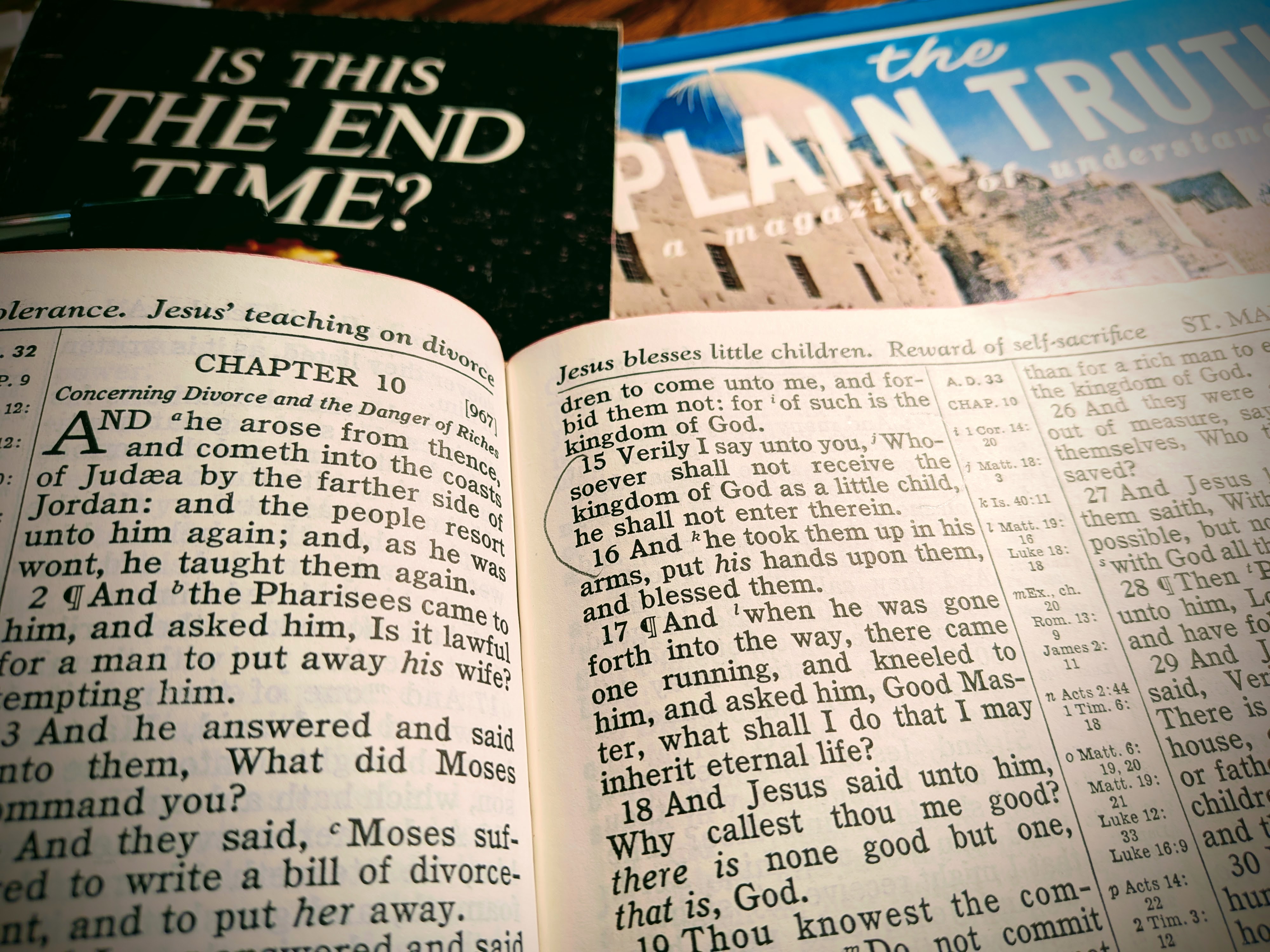
This IS Your End Time

Through his years of service as a minister of Jesus Christ, my dad, Randy Stiver, often examined certain themes, and prominent among them was the “year of last things.” It started as a lesson learned during his years at Ambassador College in Bricket Wood, England, when he was asked by a faculty member if he was truly appreciating his “year of last things” as a senior. Last dance, last Bible study, last Sabbath, all the many “lasts” of his college experience.

But as he meditated on it, and we discussed it as a family, it grew into a concept that was much bigger than youthful experiences. It developed a more somber tone, are we truly appreciating all of God’s blessings in our lives because we don’t know the day or hour of our death. We could all be facing our “year of last things” in life. 2026 was certainly my dad’s year of last things, according to God’s will.

More importantly, since we know that according to God’s plan, we who are called now have this one lifetime to act on our calling, there is an exponentially more serious tone to our own “year of last things”. We have a choice in this life, we can choose God’s way on His terms or we can reject it. Closely examined, there really isn’t an “in between” choice where we can sort of follow God’s way, but by our own standards. No soap, as the old saying goes.

When “year of last things” becomes our personal end-time

I remember that, in the course of one sermon on the year of last things, dad followed the thought through to its logical end. If our life-span is the test of our true commitment to God, then by extension, the end of our life is our, personal, end-time.

Most of us think of the “end times” as a narrow period of time that precedes the last days, a period of world conflagration and tribulation, the Divine justice of the Day of the Lord, and, ultimately, the Return of Jesus Christ. Those events will come to pass, and will be the defining moment of the generations that are alive when they transpire (perhaps even our own), but if we convince ourselves that we can live an endless summer existence of “good times,” being fairweather friends with God’s Law and way of life, and then “if things get really serious, prophetically” we shape up in the hopes (possibly vain) that God will protect us, we are deluding ourselves. We miss the reality that we are living in our own “end time.”

Our convictions should have deeper roots than that. This is a “live or die” calling. We aren’t here for the good times only, or the social outlet, or the fun Feast travel, or the doctrinal dabbling, or the [insert your distraction of choice here]. We are here for the whole life-long fight, as Paul put it: “For I delight in the law of God after the inward man: But I see another law in my members, warring against the law of my mind, and bringing me into captivity to the law of sin which is in my members” (Romans 7:22-23, NKJV).

We’re here for the overcoming because there is only one goal of any value and that is our calling to be born into the Family of God at the Return of Jesus Christ. It should shape us every step of every day.

This was what motivated my dad through the years to keep on with the extremely exhausting job of pastoring, especially when not everyone was receptive to God’s way, even in the Church of God. (Imagine that.) Nonetheless, he wanted to see that internal combustion engine of conviction and true faith chugging away in all the people of God he worked with through the years. He poured his energy into his preaching to try to stir up God’s Spirit in others. Sometimes it was effective, sometimes it felt like an endless uphill climb.

Berean brethren I have known

But there is a small subset of brethren that he, and my mom and I, found endlessly encouraging through the years. Even inspiring to our own faith. My own great-grandmothers and grandparents were among them.

They were people from, primarily, another generation. They lived life before the digital revolution, a few even before the electrical revolution. I remember some of them from my very early youth, I wasn’t yet 10 years old, and they would have been in their late 70’s and 80’s, close to the century mark in the late 1980’s. The world of their youth was less distracting, and they had a unique ability to focus on what mattered. Many of them came from an agrarian background, so being attuned to the patient perseverance necessary to grow crops and work with livestock was built into their perspective.

When they came to the knowledge of the truth of God, at that time through the work of Herbert W. Armstrong and the Radio Church of God, later the Worldwide Church of God, and having proved it true from their Bibles they had a “pearl of great price” attitude. That was it, they had found the truth and a lot of the other distractions in life that people aspire to didn’t really interest them.

They loved to talk about the truth, especially as it was outlined in the literature of the church at that time. They loved to talk about what they read in their Bibles. Not to dispute or to dabble with various interpretations or misinterpretations, as is often the case, but to be profoundly amazed and appreciative that God had revealed the fullness of His plan of Salvation for all mankind to them, in their lifetime. To know that, if they remained committed to the end, they, too, would be a part of the very Family of God. Living out the most purposeful existence of which our minds can scarcely conceive.

They knew the cost and the price of being prepared for their personal, end time. One such man had been a minister in a mainstream Christian church his entire career and only came to a true understanding of Scripture late in life. Yet he embraced it with absolute enthusiasm. He knew the cost and value of God’s truth.

Their memory still inspires me, just as my dad’s unwavering commmitment to teach God’s way of life even as he declined in the hospital, inspires me. The same way that the record of the faithful in the Bible inspires me, and the commitment and struggle and suffering that the apostles lived inspires me. The way the suffering and commitment of Jesus Christ should inspire us all.

Live like this is your year of last things, as if your personal end time is upon you. Eyes forward. Onward and upward as my dad used to say. You will not regret it. We will not regret it.

– Amanda Stiver

*If you wish to reprint this commentary or learn more about how to do so, please contact me in the comments below. I reserve my rights to this content, it is not in the public domain for use or reprint without my permission. **All images are property of Amanda Stiver, unless otherwise noted. Please do not re-use without permission.

A Revolutionary Comparison: Maintaining the Engine of Your Convictions

Something my dad and I discussed often, in the years before his death, was the importance of courageous personal conviction. In the context of the true faith of Jesus Christ and the historical Church of God, nothing could be more essential.

We have arrived in the 250th year of the American era. There are parallels between the courage of our spiritual convictions and the courage of the temporal or political (as in “of the people” not “of the modern political arena”) convictions of those who made up the founding generation of the American Revolution.

There was an ideal of liberty that was expressed in the years preceding 1776. Christopher Flannery, guest speaker at Hillsdale College in 2026, puts it this way: “It is the eloquent record of the conception and articulation of the American idea of political freedom in pamphlets, petitions, state papers, letters, sermons, constitutions, resolves, bills and declarations of rights, memoirs, diaries, journals, treaties, and speeches—mostly in a compressed period in the 1760s and 1770s—in which a revolutionary generation learned to think and act like the Americans they were becoming” (Flannery, Imprimis, June/July 2026).  

A “generation learned to think and act like the Americans they were becoming.”

Should not the same be said of us? That a generation of those called to the fullness of biblical truth, who anticipate resurrection into the very Family of God, should learn to think and act like the God-beings they are becoming?

A “mere knowledge” versus “living action”

Flannery continues, delineating what the “real” American Revolution means as it passes onward to future generations: “This experience should not be seen as merely historical. To experience the real American Revolution, and not just the record of it, is to experience the idea of political freedom becoming active in our hearts, minds, and lives. It is to experience being free…in the active exercise of the capacities required for self-government. It is an experience that requires, as the Virginia Declaration of Rights proclaimed in 1776, ‘a firm adherence to justice, moderation, temperance, frugality, and virtue, and [a] frequent recurrence to fundamental principles.’ ”

Again, putting aside the political concepts, we can see some very clear spiritual parallels. To experience true spiritual freedom (bound up in obedience to God and His law) it can be said of us that God’s way should become active in our hearts, minds, and lives. In fact, it was commanded us to do so by Jesus Christ, Himself!

“And you shall love the Lord your God with all your heart, with all your soul, with all your mind, and with all your strength.’ This is the first commandment. And the second, like it, is this: ‘You shall love your neighbor as yourself.’ There is no other commandment greater than these.” (Mark 12:30-31, NKJV)

To love God is to obey Him. Just as to love liberty, according to the founding American generation, was to express it by living it in the form of justice, moderation, temperance, frugality, virtue, and recurrence to fundamental principles—which to the American founders were rooted in the Ten Commandments.

Just “knowing” about God’s way isn’t enough, it must become so much a part of our daily action and personal moral character that no matter our mistakes—and there will be some—we rise again to reach for God’s way and truth, over and over again.

It is even to be willing to die for that spiritual ideal. And our Savior does ask that of us.

Maintain your engine of conviction

History offers no small number of examples of American Revolutionary heroes and heroines who sacrificed greatly for their political ideals. But the Bible, in Hebrews 11, offers us an even more compelling list of examples of those who possessed living faith, and followed God—some prospering and others suffering—no matter the cost.

Is it too much to ask that we, who live in a very materially privileged time, should be just as willing a sacrifice?

To develop that sacrificial mentality, we must put our spiritual ideal above self. We have to become a self-sustaining engine of courageous, personal conviction by holding fast to the truth as we have received it, resisting the urge to become the arbiter of our own personal pet doctrines by dabbling in the Devil’s playground of “ideas” that tickle our ears—to which many, who preceded us, have fallen victim.

The race we run is by no means a “mere” sport. It is deadly serious.

“If we aspire to…live a godly life in genuine conviction of God’s true way as delineated in His Word, the Bible, we must be sure that we do so in humility, sincerity, and in truth before our Creator. Any other way, no matter how appealing, is simply not God’s way!” (Randy Stiver, “Beware of Just Doing—The God Thing,” theArrowheadJournal.com, May 4, 2024)

– Amanda Stiver

*If you wish to reprint this commentary or learn more about how to do so, please contact me in the comments below. I reserve my rights to this content, it is not in the public domain for use or reprint without my permission.

**All images are property of Amanda Stiver, unless otherwise noted. Please do not re-use without permission.

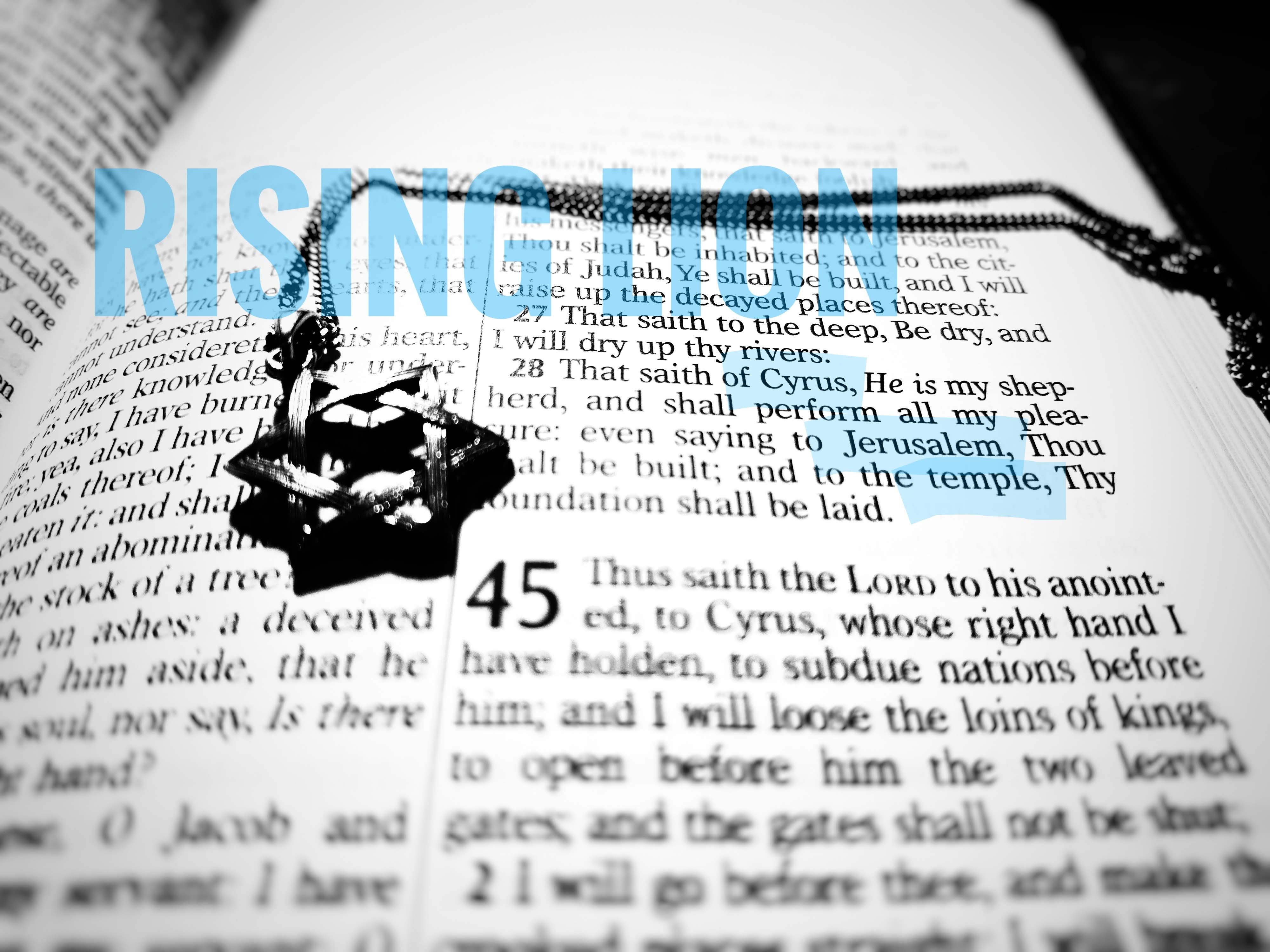
Operation Rising Lion: Modern Nations–Ancient Alliances

Early in the morning on Friday, June 13th the state of Israel launched a dramatic attack on one of the primary nuclear reactors in Iran. In addition, a number of key Iranian military leaders and nuclear officials were targeted and killed after it was confirmed that Iran had likely reached the capacity to produce nuclear warheads.

Based on repeated public threats from the Iranian leadership, it is well established that they planned to destroy Israel and, potentially, other key nations and cities in the Arab world and the west with these weapons.

Israel titled its mission (which is ongoing) “Operation Rising Lion.” The lion of Judah is a biblical symbol drawn from Genesis 49:9. And is used in a number of places in scripture to refer both to the tribe of Judah, as well as to the ultimate descendant of that tribe, Jesus Christ (Revelation 5:5).

Indeed, while the state of Israel, which actually consists primarily of the tribes of Judah, Benjamin, and Levi, may leap like a lion in the days leading up to the second coming of Jesus Christ, it is Christ Himself who will give the final roar to world events.

It is interesting to note the relationship that the Jews have historically had with the Persian Empire (what we, today, call “Iran”), and specifically with the Persian Emperor Cyrus (reign: 559-530 B.C.), who granted the freedom to return home to the Jews who had been taken captive by the Babylonians 70 years before (Ezra 1, 2 Chronicles 36:22-23, Jeremiah 25 and 29). It was through his edict, an event that was prophesied nearly two hundred years earlier by the prophet Isaiah (Isaiah 44 and 45), that a small remnant of Judah and some of the Levitical priestly families were allowed to return to Jerusalem to rebuild the Temple of God.

Therefore, it should come as no surprise that Prime Minister Netanyahu of Israel issued a statement late on Friday, June 13th acknowledging this debt to the Iranian people and encouraging to them to throw off their oppressive leaders: “The nation of Iran and the nation of Israel have been friends since the days of Cyrus the Great. The time has come for the Iranian people to unite around its flag and its historic legacy, by standing up for your freedom from the evil and oppressive regime.”

In due time we will see what the ultimate outcome of this recent action by Israel against Iran’s nuclear weapons program will be, but we can know with certainty that it is all part of the staging of events that will ultimately lead to the return of Jesus Christ. The empires and nations of the past have by no means disappeared into the fog of history, they are the same players now, but with different names.

Be watchful, be vigilant (1 Peter 5:8)—it is an exciting and sobering time to be alive and watch these events unfold, but it is more exciting to anticipate the complete transformation and reclamation of humanity that will occur as the government of Jesus Christ ushers in a new era of history!

-Amanda Stiver, with Randy Stiver

*If you wish to reprint this commentary or learn more about how to do so, please contact me in the comments below. I reserve my rights to this content, it is not in the public domain for use or reprint without my permission.

**All images are property of Amanda Stiver, unless otherwise noted. Please do not re-use without permission.
Video Recommendation: Egypt and the Conquest of Canaan

Where is outside evidence for Biblical events surrounding the Exodus?

Recently the Associates for Biblical Research released a two-part program (condensed into one episode) interviewing Dr. Gary Byers, an expert in archeology who has specialized in understanding how the Amarna Letters (1350 to 1334 B.C.), written just under a century after the Exodus (approx. 1446 B.C.), connect to the Israelite conquest of Canaan during the same time period (video link below).

For a little background: the Amarna Letters are a trove of clay tablet cuneiform communications between Egypt and its subordinate city-states in what we know as the Land of Canaan, which was part of the eastern empire of Egypt at that time. They repeatedly call for help from Egypt against various raiders called “habiru”. Some of whom were very likely Israelites fulfilling the conquest of the land God had given them, as well as other groups that were harassing Egypt’s client states during a time when the Egyptian government was unable to project power effectively.

These letters were found in a place called Akhetaten (modern Amarna, Egypt), founded by the rebel king of Egypt, Akhenaten, who ruled in the mid 1300’s B.C. Akhenaten moved the centers of Egyptian power to this new city and attempted to pursue a semi-monotheistic religion. He ultimately failed, and Egypt returned to its previous systems, but it never regained the prominence that it had had under Akhenaten’s family dynastic line, the 18th Dynasty of Egypt. The same dynastic line with whom Moses interacted in previous generations, during the Exodus.

This video is a helpful to watch because it places the events of the Conquest of Canaan (approx. 1406 to the 1320’s B.C., found in the books of Numbers, Joshua and Judges) into the context of regional events at that time. Though it is no surprise that archeological evidence consistently supports the biblical record, it is valuable to see where God’s hand in history has worked, and thus will continue to work through His people.

Below is the link to the video produced by “Associates for Biblical Research – Digging for Truth”:

Title: “The Ancient Egyptian Amarna Letters and the Exodus: Digging for Truth Episodes 251/252”

Link on YouTube: https://youtu.be/YTUxc2XF9Po?si=P5ZQ2lo3o6n-aBZd

God has invested much in us, His truth and salvation. And He is consistent:

“Jesus Christ is the same yesterday, today, and forever. Do not be carried about with various and strange doctrines. For it is good that the heart be established by grace, not with foods which have not profited those who have been occupied with them,” Hebrews 13:8-9.

Let’s reflect that same commitment to God every day in our faithfulness to the way of life that has been committed to us!

-Randy Stiver & Amanda Stiver

*If you wish to reprint this commentary or learn more about how to do so, please contact me in the comments below. I reserve my rights to this content, it is not in the public domain for use or reprint without my permission.

**All images are property of Amanda Stiver, unless otherwise noted. Please do not re-use without permission.

Savor the Psalms…

Does poetry really have a relevant purpose in our daily prayers? What can we learn from the greatest poet of ancient Israel?

Much of the Bible – especially in the Old Testament was written in a poetic style. God inspired it that way. Our Creator likes good poetry – especially poetry that causes us to stop and think—the essence of digesting and applying God’s ways in our lives!

Divine poetry speaks powerfully to all ages and eras – including our own 21st century time frame. Imagine placing yourself as a “right there” listener to the lyrical and musical skills of King David!

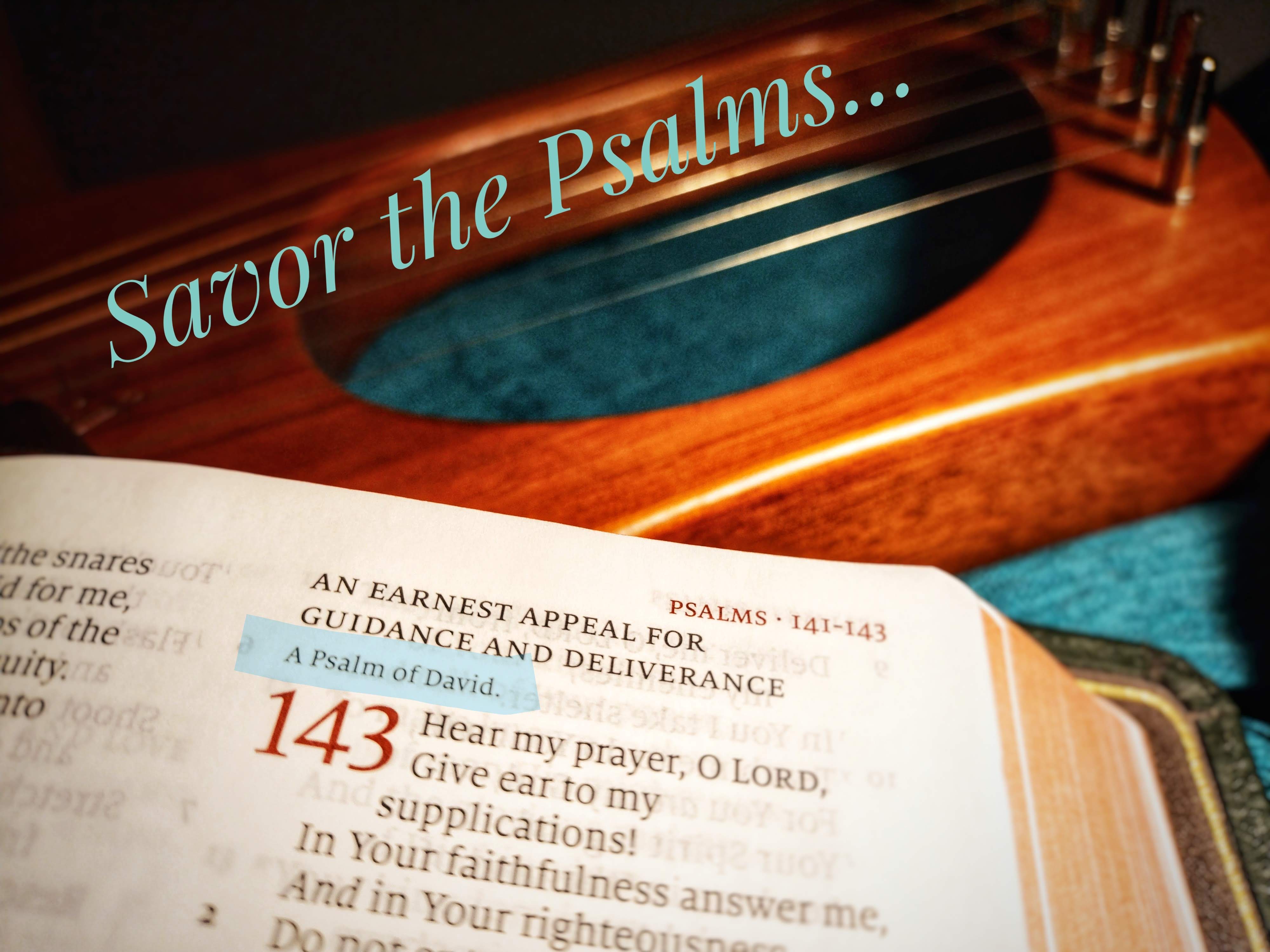
An excellent writer, a marvelous poet, and the premier musician of his time—not only did King David compose music, he also invented musical instruments (see Nehemiah 12:36)! One instrument is mentioned here in Psalm 144:9:

“I will sing a new song to you, O God; On a harp of ten strings I will sing praises to You,…”

Furthermore, he was an inspired and faithful prophet of God—as well as being the great King of Israel. King David gave pen to many of the psalms, and likely some of the proverbs recorded in the Bible.  

King David beautifully expressed the spiritual and emotional depth of how one perceives and responds to God and His way. When we read these poems they help us to shape our thoughts and emotions in a godly way.

Faithful expression

Note how Psalm 143, penned by King David, expresses his faithfulness, dedication and closeness to God as his Creator (and likewise ours). A classic example of how David responded to God in heartfelt, poetic prayer (this is merely an excerpt): 

“I remember the days of old; I meditate on all your works; I muse on the work of Your hands. I spread out my hands to You; My soul longs for you like a thirsty land. Selah” (v. 5-6).

How essential is it for us to meditate on God’s works? To long for God and His perfect righteous way? In a world that is suffering a drought of godly thinking and obedience to the Ten Commandments, do we thirst for and prioritize obeying God in our lives?

Abundant imagery

Each psalm is a poetic (and oftentimes prophetic) message or prayer, often a plea to God. We also note that David wasn’t the only psalmist in Israel. However, from a human perspective he set the standard in his day and historically.

For example in Psalm 144 King David pleads with God for protection and asks for God’s blessings, described with beautiful imagery of agricultural abundance:

“Rescue me and deliver me from the hand of foreigners,
Whose mouth speaks lying words,
And whose right hand is a right hand of falsehood—
That our sons may be as plants grown up in their youth;
That our daughters may be as pillars, Sculptured in palace style;
That our barns may be full, Supplying all kinds of produce;
That our sheep may bring forth thousands And ten thousands in our fields;
That our oxen may be well laden; That there be no breaking in or going out; That there be no outcry in our streets.
Happy are the people who are in such a state; Happy are the people whose God is the Lord!”
(Psalm 144:11-15)

In verse 14 is a plea that God will not send Israel into captivity, “…no breaking in or going out; …no outcry in our streets.”

As we know, after they split, both the northern Kingdom of Israel and the southern Kingdom of Judah were eventually taken captive by Assyria and Babylon, respectively. Therefore, this psalm also serves as a prophecy.

All of these complex themes are sewn together through very beautiful poetic verse.

Putting poetry to work

When you are at a loss for a Bible study subject or struggling to put your prayers into words, take one of the psalms and read it as though you are praying it personally. See where you can incorporate the words and phrases that do honor to God, magnify His greatness, and give voice to our hard-to-define thoughts and emotions.

Learn to savor the Psalms and they will enrich your prayers and communication with God!

-Randy Stiver

*If you wish to reprint this commentary or learn more about how to do so, please contact me in the comments below. I reserve my rights to this content, it is not in the public domain for use or reprint without my permission.

**All images are property of Amanda Stiver, unless otherwise noted. Please do not re-use without permission.
The Twelve -Wrongs- of Christmas

You’ve heard of the twelve days of Christmas, but you need to know about its twelve -wrongs-!

There’s an old saying, “two wrongs don’t make a right.” So how can twelve wrongs make the holiday of Christmas right? This is a question that all who profess to follow Jesus Christ urgently need to answer! 

Most people blindly assume that everything about Christmas comes from the Bible. But never assume anything—always prove what is the truth. 

1st – Wrong Day:  Jesus Christ was not born on December 25. His human birth was in the autumn when the local shepherds were often in the field at night with their flocks (see Luke 2:8). It often snows in the winter in and around Jerusalem—and Bethlehem is a less than ten miles from the city. Wintertime is too cold for outdoor shepherding at night.  

John the Baptist conducted a widely noted ministry which served as a six month introduction to the beginning of Christ’s ministry. Through their mothers John was a distant cousin of Jesus (Luke 1:39-45). In fact, he was six months older than Christ. Based on the time of year that his father, a Levitical priest of the order of Abijah (Luke 1:5), was scheduled to serve at the Temple, we know that John was born in the spring. Therefore, Jesus was born in the autumn. 

If one sought to observe the day of birth of the most important human being in all of history, then why keep it on the completely wrong season and wrong day? In fact, Christ never commanded or intimated that His birthday was to be observed. He did, however, command a vital series of annual holydays listed in Scripture (Leviticus 23) to be faithfully kept by His true followers. 

2nd – Wrong Roots:  By “roots” we mean origins.  The day that millions of traditional Christians call Christmas is actually a lecherous, pagan holiday called Saturnalia by the Romans, and various other names by virtually every pagan religion in history. It was of importance to those pagans (worshippers of many god and goddesses) because they worshipped the sun. The world’s version of Christianity (and definitely not Christ’s) simply appropriated a day near the winter solstice and repackaged it as a so-called Christian holiday.  

Through history since, various denominations, knowing the pagan origin of Christmas, have claimed it as a “trophy for Christ.” There is no biblical sanction for doing that. For more details on its wrong origins just read the Christmas article in virtually any encyclopedia, but especially an older edition.  

The key point: God commands His own annual holydays—and in no way sanctions re-packaged paganism! 

3rd – Wrong Tree:  Millions, maybe billions of today’s Christians are infatuated at the sight of a decorated Christmas tree. How could it be wrong if it seems so right? Well, “there is a way that seems right to a man, but its end is the way of death” (Proverbs 14:12 and 16:25). 

Making an idol of a tree cut from the forest, decorated with silver and gold, fastened with hammers so it won’t topple over in the living room is flatly condemned by God through His prophet Jeremiah (chapter 10:1-8). The winter solstice tree or yule log, now Christmas tree, has long been an intrinsic part of pagan worship. 

The ancestral wrong tree was in the Garden of Eden and named by God “the tree of the knowledge of good and evil.” That’s the one He commanded our first parents Adam and Eve to avoid. There was a right tree of course, “the tree of life” of which God commanded Adam and Eve to eat its fruit (Genesis 2:8-9, 15-17).  Because they listened to the serpent (Satan) they ate the fruit of the wrong tree, and humanity has been, in essense, eating of it ever since. 

4th – Wrong Spirit:  How many times have you heard people speak of the “Christmas spirit”? Unfortunately, those with alcohol problems tend to speak of Christmas “spirits”—and the holiday is often used as an excuse for drunkenness.  

When you add up all these wrongs of Christmas, there is a wrong (as in evil) spirit closely associated with this and similar holidays of “this present evil age” (Galatians 1:6). That wrong spirit is the “serpent” of the Garden of Eden. It wasn’t an actual snake, but was the fallen angel, Satan the devil masquerading as a serpent. Read Revelation 12:9, noting, “so the dragon was cast out, that serpent of old, called the Devil and Satan, who deceives the whole world…”   

The plain truth is that Satan as that fallen angelic spirit-being is the wrong “spirit” of Christmas. The evil archangel who rebelled against God, has misled mankind to adopt festivals that were never part of God’s true religion before Christ’s life on earth or after! 

5th – Wrong Ethic:  An ethic is a moral principle like, “do not take God’s name in vain,” “honor your father and mother,” “do not steal”… and “tell the truth.” The last is an appropriate example of an ethic. Since Christ did not teach the keeping of Christmas, and did not sanction all the other religious falsehoods that it embodies, then why should modern families perpetuate the falsehoods it portrays?  

By keeping a supposedly “religious” holiday wrapped in layers and layers of lies (Santa and flying reindeer among them), parents condition their children to perpetuate the deceitfulness and prevaricating to the next generation.  

This is a great challenge like the one with which God confronted Cain, the first son of Adam and Eve. Cain hated his righteous brother Abel. God called him out about his ethics: “…Why are you angry? And why has your countenance fallen? If you do well, will you not be accepted? And if you do not do well, sin lies at the door…” (Genesis 4:7).

Unfortunately, Cain had learned bad ethics from his parents’ example in the Garden of Eden. In perpetuating the Christmas myth, God’s true, biblical ethics and teachings are hidden from the children of future generations. 

6th – Wrong Gospel:  The early Church of God that Jesus built did not keep Christmas because the true God of the Bible did not sanction the holiday as a “commanded assembly” or “holy convocation” (terms used in Scripture for the Sabbath and annual holydays as in Leviticus 23).  

Christmas was not a point of discussion among the twelve Apostles. It didn’t become a “Christian” holiday until many years later. However, the apostle Paul confronted the early corruption of the biblical gospel of the Kingdom of God which Jesus taught, “I marvel that you are turning away so soon from Him who called you in the grace of Christ to a different gospel…” (Galatians 1:6).  

That different and false gospel didn’t come from Christ or God the Father. “But even if our gospel is veiled to those who are perishing, whose minds the god of this age has blinded …” (2 Corinthians 4:3-4), clearly, the great deceiver, Satan the Devil, “the god of this age” is the source of the false values, false doctrines, false festivals like Christmas and the false gospel. 

7th – Wrong Songs:  “For out of the abundance of the heart the mouth speaks…” is a proverb spoken by Christ (Matthew 12:34). Also true is the logical next step:  out of the abundance of the heart the mouth sings. Music is powerfully influential in both teaching and reinforcing the meaning and values of the lyrics (for good or bad). 

Most people’s Christmas memories are tied to the holiday’s music. Millions can sing parts of numerous songs of the season by heart. Sadly, Christmas hymns extol a wrong holiday with wrong, non-biblical lyrics. There is no Santa Claus and he is not coming to anyone’s house on a flying sleigh pulled by a reindeer with a red nose! 

God loves good songs of truth. Every psalm in the Bible’s book of Psalms is a song. There are also many other sacred songs in Scripture. The vital value of biblical songs is that they all express God’s truth—not pagan myths, benevolent fabrications or outright lies! 

8th – Wrong Gifts:  Did you ever notice the discrepancy of Christmas gift-giving? Today people give each other gifts, and billions of dollars or other currencies are spent on Christmas gifts. It is the most commercialized time of the year! 

However, shortly after His human birth in the autumn the wise men called magi from the East (the Parthian Empire) arrived to pay homage to the One who was the infant Messiah (Matthew 2:1-11). They brought a variety of gifts that were fitting tribute for a king because Jesus Christ was and is the King of Kings and Lord of Lords (Revelation 19:16). 

Please note: the wise men did not give their gifts to each other! They gave their gifts of honor and worship to Jesus Himself (Matthew 2:11). Thus, Christmas gift-giving falsely represents the true events surrounding Christ’s birth. 

9th – Wrong Lesson:  Despite the moniker of “the season for giving,” the basic lesson of Christmas is about what you can “get” – gifts, intoxication, and in some cases promiscuity, promotions, bonuses, etc.   

In many ways Christmas is a version of the health and wealth gospel. It’s the getting rather than giving or serving others…and especially loving and serving the true God of the Bible. God does promise blessings for obedience to His laws and ways of living, but the Christmas holiday is not one of God’s festivals, in fact it’s in opposition to God’s holy days.  

The whole lesson of Christmas is wrong. It glorifies the way of “get” and getting while flagrantly disregarding God’s own holy festivals of Passover, Unleavened Bread, Pentecost, Trumpets, Atonement, Tabernacles and the Last Great Day. In essence, the wrong lesson of Christmas says, “ignore what God actually commanded, perpetuate an ancient pagan celebration, and get what you want.”  

10th – Wrong Mission:  What is the mission of Christmas, what is its purpose – and where in the Bible did Jesus Christ commission His apostles and church members to keep His erroneously supposed birthday?  

People can search in vain because it’s not there! Christmas is a re-packaged pagan holiday and no matter how much feeling is put into it, keeping Christmas actually opposes the mission that the true Jesus Christ of Scripture gave His disciples. 

Christ was and expects His followers to be completely and truthfully mission-focused. His mission was, and ours should be, to proclaim the true gospel—the gospel of the Kingdom of God. “And this gospel of the kingdom will be preached in all the world as a witness to all the nations, and then the end will come” (Matthew 24:14).  

11th – Wrong Form:  Human beings were made in the image of God (Genesis 1:26-27), that is, in His bodily shape and form. This truth was verified when as an infant Jesus Christ was born of the virgin Mary. Most people intuitively comprehend the fact that man was created in the image (form, shape and potential) of God fact despite educational conditioning through the erroneous theory of evolution. 

Form is also the established system, custom or practice—as in the true form of worshipping God as clearly revealed in the Bible. From the Garden of Eden forward God revealed to his servants, the patriarchs and prophets of old, then later Christ thoroughly instructed His twelve apostles in the true way of life and righteous form of worship. 

Neither in the Old Testament nor in the New Testament was Christmas revealed to be in any way a part of the system, custom or practice of God’s people. If it is not a part of the true form of worship, then it is a part of an entirely wrong and sinful form of worshipping God. That fact should weigh heavily on the mind of any person of good will who desires to know and follow the truth. 

12th – Wrong Truth:  “But the hour is coming, and now is, when the true worshipers will worship the Father in spirit and truth; for the Father is seeking such to worship Him. God is Spirit, and those who worship Him must worship in spirit and truth” (John 4:23-24). 

Those are the words of Jesus Christ, the very One who neither commanded nor intimated that His human birth should be celebrated. Thus, Christmas, in effect, is not part of God’s truth. 

Yet, long after the twelve apostles were in the grave, in the 200s A.D. the budding Roman church began attempts to determine the date of Jesus’ birth. As it developed, the trappings of the Christmas festival copied various Roman and northern European pagan sun-worship celebrations that had long been observed around the winter solstice. The result was a traditional Christian holiday comprised of completely fabricated “truth.” No matter how accepted it became over the centuries in the greater Christian world, it remains the wrong truth—which of course is not truth at all! 

You can know what is true! 

The really good news is that God’s truth is right before our eyes! If we study God’s Word in the Bible with an open mind and genuine humility His truth will come crystal clear to those God is calling at this time.

Learning the twelve wrongs of Christmas is only a beginning. God would have us know much more of what is right. In fact, Jesus Christ personally promised, “And you shall know the truth, and the truth shall make you free.”

Freedom from wrong is the right thing to seek!

-Randy Stiver

*If you wish to reprint this commentary or learn more about how to do so, please contact me in the comments below. I reserve my rights to this content, it is not in the public domain for use or reprint without my permission.

**All images are property of Amanda Stiver, unless otherwise noted. Please do not re-use without permission.
The Uphill Battle for the True Faith

Do you sometimes feel like you are fighting an uphill battle for God’s way of life – and for the true faith of Jesus Christ? If you do,…then don’t feel surprised, but do take courage!

As true Christians striving to faithfully live God’s way of life – we should be fully engaged in living the same faith and way of life that Jesus Himself lived when He walked on earth during His human lifetime over 2,000 years ago.   

By contrast, and in conflict against us, are the sinful spirit powers of Satan the Devil and his genuinely evil, cohort of fallen angels. These demonic spirit enemies are real, and they harbor no love for mankind!

The nature of spiritual war

Note this…these fallen (meaning “sinful”) angels, in particular, fight against the faithful brethren right down from the few called-out-ones in the Old Testament, through the time of Christ and the beginning of God’s true church in the New Testament, and all the way to today! The apostle Paul warned Timothy, who was just beginning his ministry, about this danger.

What form of deception do Satan and his demons use?

“Now the Spirit expressly says that in latter times some will depart from the faith, giving heed to deceiving spirits and doctrines of demons,…” 1 Timothy 4:1. These false doctrines may vary a little over time, but if it doesn’t track with God’s word and with the careful, consistent teachings of God’s true Church, then it originates, ultimately, with Satan. Be alert!

Consistency triumphs over hypocrisy

Hopefully every day you are personally striving wholeheartedly against the deceptions of Satan! However, remember…our battle is primarily spiritual, not physical—and always has been since even before Satan deceived Adam and Eve in the Garden of Eden.

As baptized members of the historic, true Church of God (also known as the “Body of Christ”), we have a vital calling and duty to perform in the spreading of the true gospel yet today. How faithfully we live our lives—our personal example—is critical. Hypocritical conduct does not do God’s Work, nor exemplify Christ to others! Be consistent and faithful in the truth!

No doubt you have “been there and done that” as you have lived God’s way of life for many years. Or, maybe you’re just arriving “there” now in the process of your spiritual conversion?

Either way, when we are faithful in obeying God, we share a genuine kinship with the spiritual brethren of all eras of history.

God’s Word recharges us

The great patriarchs… Noah, Abraham, Isaac, Jacob, Moses, Aaron, Joshua, and King David plus the prophets of old in ancient Israel, and the apostles and brethren in the New Testament era experienced the same feelings that we often do today.

And precisely for our benefit God inspired King David (and others) to write beautiful and powerful accounts of those battles (both the physical and spiritual) in the Psalms and the historic books of Scripture. 

Although God does not call us today to fight in physical wars, He does call and expect us to engage in those spiritual conflicts against Satan, false teachings, and personal sin.

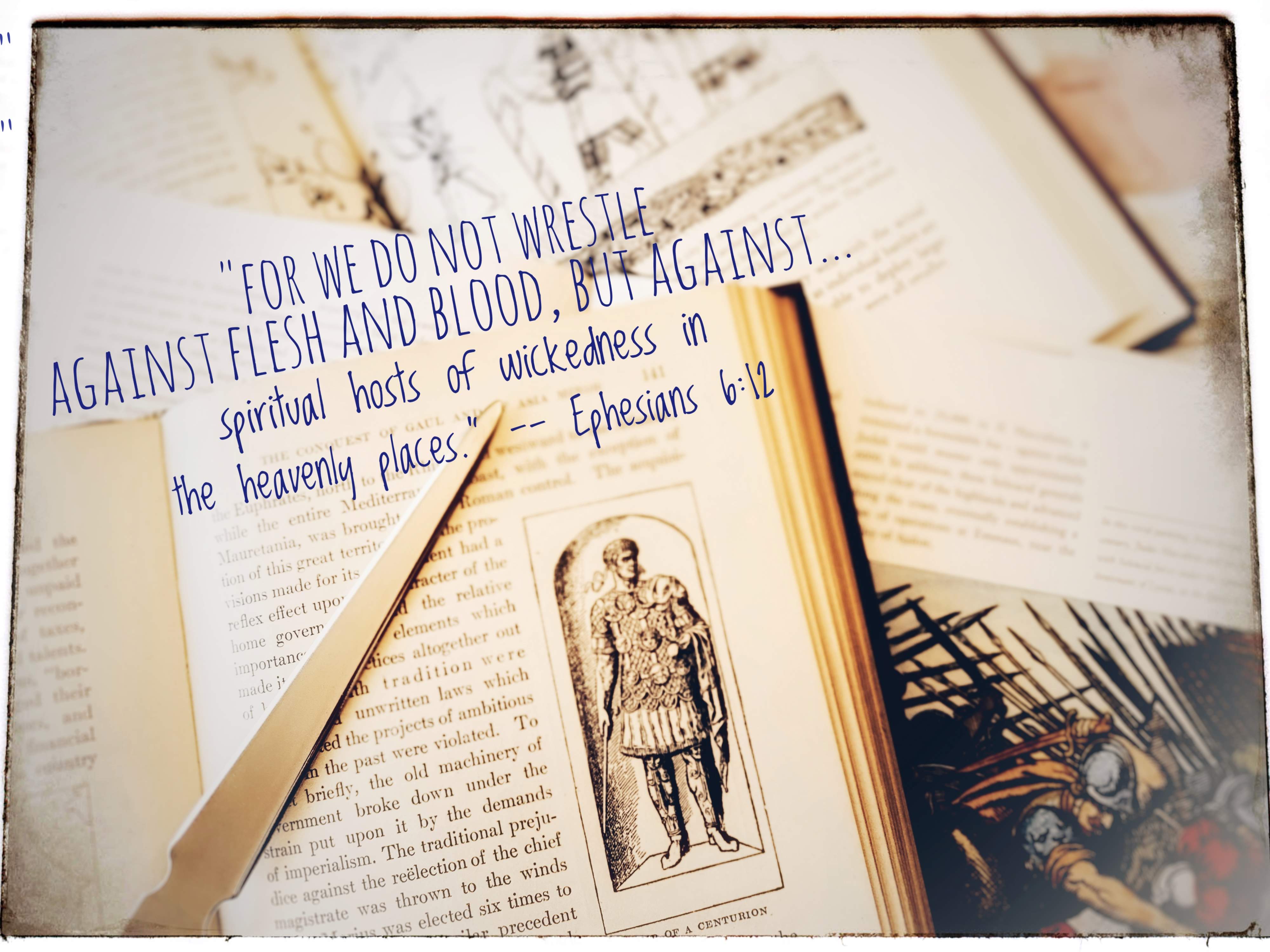
In fact, if we’re not fighting the good fight spiritually, then we’re not truly resisting the spirit forces of evil. If you find yourself sidelined from the path and progress of overcoming, consider that a wake-up call! Activate a personal re-dedication to studying, deeply, of God’s word, and of the truth preserved through His true Church. Put on the whole armor of God (Ephesians 6:10-20)!

We are committed to victory! Stand firm in the true faith of Jesus Christ!   

–Randy Stiver

*If you wish to reprint this commentary or learn more about how to do so, please contact me in the comments below. I reserve my rights to this content, it is not in the public domain for use or reprint without my permission.

**All images are property of Amanda Stiver, unless otherwise noted. Please do not re-use without permission.
See Things as God Sees Them

Whose opinion is most important and influential in this present, evil world of today?

Is it the opinion of the liberals or the conservatives of today’s politics? What about the talking-heads of social media and internet video websites? Is it the clearly prejudiced opinion of one of these self-proclaimed experts on all things – biased in their assessment of religion, the weather, medical concerns, world politics or anything else, for that matter?

Should it be any of these?

As a part of the historic, prophesied true Church of God today in the 21st Century… we genuinely need to see things as God, the Father and Jesus Christ see them!

During His ministry on earth some 2,000-plus years ago Jesus Christ personally instructed His twelve disciples to always strive to see things as God sees them (Acts 4:18-20, Matthew 6:33).

This is one of the great keys of spiritual understanding. Thus, the disciples became apostles and the brethren in that era were more spiritually focused on God’s truth and way of life and work. They felt an urgency in their calling and desired to see a world ruled by God’s vision, but the fulfillment of that vision would take longer than they understood at that time (1 Peter 4:7).

Modern brethren

As modern, historic brethren to the faithful ministers of Jesus Christ – we also need urgently to be watching for and anticipating the prophesied world events that will occur (and have occurred) in our time, in preparation for the second coming of Jesus Christ.

We have witnessed a political pendulum swing in the recent U.S. election, and it can be tempting to assume that this will precipitate widespread repentance and moral reform, but America’s moral sins have become too deep set. God will still call America to account for those sins.

Instead, remember, we – as members of God’s true Church today – are being called to repentance now. This is our day of salvation! Keep your eyes on preparing for God’s Kingdom!

Watch, hear and heed

Jesus repeatedly admonished His disciples – to personally repent and preach the true gospel as a witness to the world (Matthew 28:18-20, Acts 1:8, 2:38-39). At times the preaching of the true gospel was powerful, but we have always had an adversary: the Devil. Therefore, some historic eras of God’s true Church were more faithfully effective than others in preaching the gospel of the Kingdom of God.

Whatever the case, proclamation through the efforts of God’s historically small flock was delivered to the world as a witness. Many who are alive today observed, first-hand, the powerful message that was delivered by Mr. Herbert Armstrong in the 20th century, augmented by doors that were clearly opened through God’s divine intervention.

The True gospel and false gospels

However, even the apostles had to carefully watch world events (in the light of Bible prophecy) as Jesus had taught them. They had to listen carefully to any who claimed to teach God’s truth — and then compare it to Jesus’ in-person instruction (Matthew 7:21, 24:23-25). Even then, they had to evaluate the conduct, honesty and personal faithfulness of any who claimed to teach the truth (see 1-3 John, Jude). We need to be just as watchful in our modern era!

The historical record of God’s work being done by His true Church is easily trackable at times and somewhat less so at other times—often due to persecution by pagan and other false-Christian denominations who sought to eradicate even the historical records of the true brethren.

Yet God has always continued to do His work, to proclaim the coming Kingdom of God, through the agency of God’s Church. He promises that there will always be a remnant of that true Church (Romans 11:5, Matthew 16:18, Luke 12:32)

Don’t be thrown by the swinging pendulum of politics in America or abroad. Our focus is on God’s Kingdom, not, ultimately, on the kingdoms of men. A false sense of security is a spiritual danger zone. Times may get a little better, but they will most assuredly, finally, get worse.

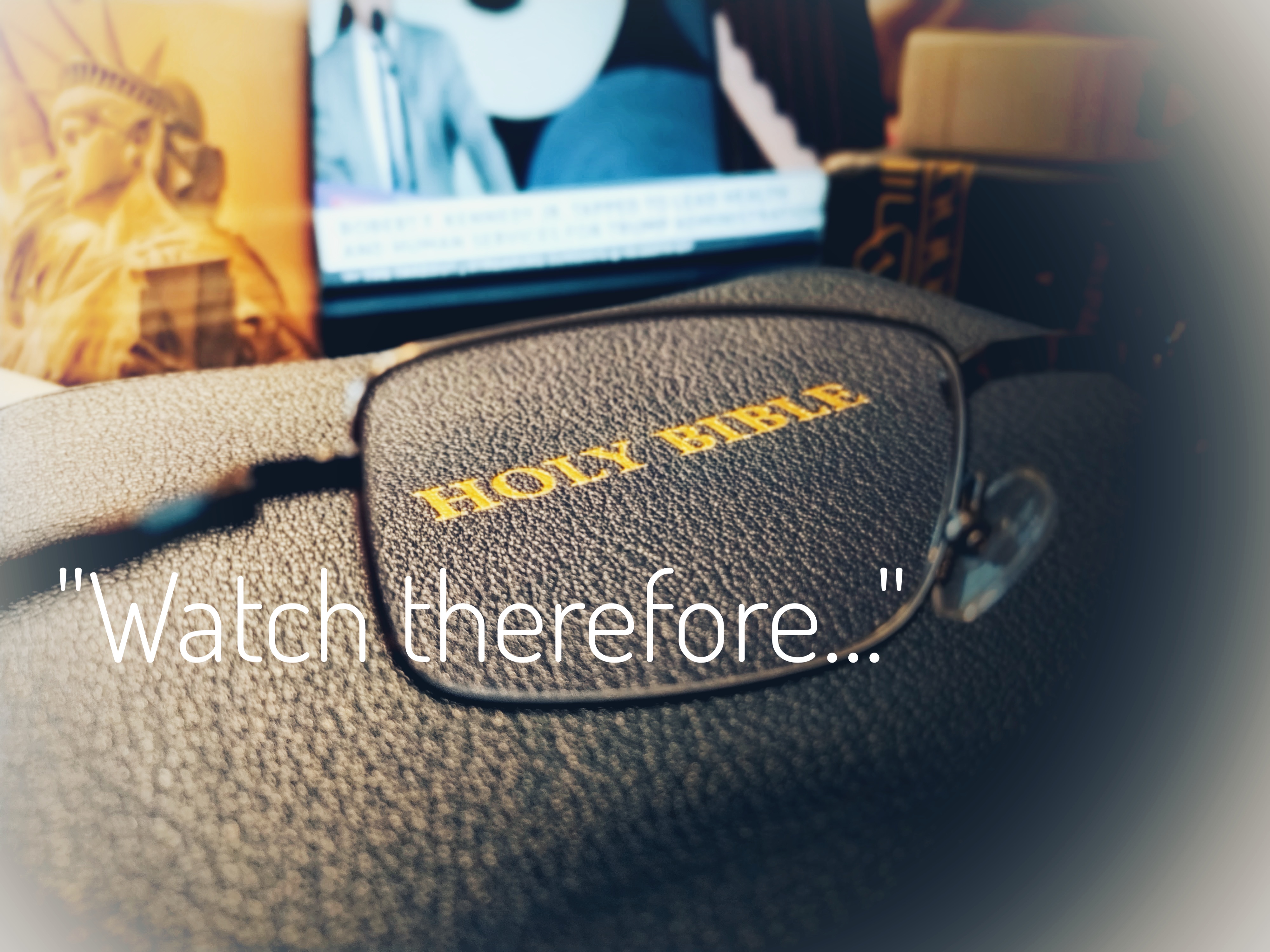
Our personal responsibility is clear: “Watch therefore, and pray always that you may be counted worthy to escape all these things that will come to pass, and to stand before the Son of Man” (Luke 21:36).      

–Randy Stiver

*If you wish to reprint this commentary or learn more about how to do so, please contact me in the comments below. I reserve my rights to this content, it is not in the public domain for use or reprint without my permission.

**All images are property of Amanda Stiver, unless otherwise noted. Please do not re-use without permission.

The Source of Truth

One of the world’s all-time greatest mysteries: What is truth and where does it come from?

Reasonable thinkers recognize the existence of truth, and some even embrace the concept that there is absolute truth. But many highly educated thinkers maintain that there is no objective truth, that all we see, hear, feel and live is imaginary.

Truth does exist

You are living proof that truth exists. Life on earth makes that clear. You are conscious, can perceive that humanity is the peak of physical existence on this very physical planet that rotates in a precise, life-sustaining orbit around the sun. The water you drink, the food you eat, the home you live in, the vast extent of human civilization around the earth are ample evidence of the truth of existence—as is the immense universe visible to us in the night sky.

Man can discover scientific truth

Human beings have been endowed with five, physical senses and a remarkable human mind (vastly more powerful and complex than animal brains) to analyze and process the knowledge it gathers. The word “science” come from the Latin word for “knowledge.”

Mankind has always been searching for the truth of the natural world and the meaning of life. Great scientists and thinkers have accumulated and discovered a considerable understanding of our physical existence. Building on their study of Mathematics, educators learn and teach three key sciences: Physical Science (physics, chemistry and astronomy), Earth Science (geology, oceanography, paleontology and meteorology) and finally Life Science (botany, zoology, genetics and medicine).

Absolutely unique, man is the only creature on earth that seeks to understand his role in the universe. The fundamental knowledge distilled from those core sciences is understood as truth. It’s viewed as truth, to which—when discovered—more truth can be added.

Man lives historical truth

From Adam and Eve in the Garden of Eden people have lived, recorded and then studied their own history. That history—provided it’s accurate—is truth.

In order to exalt their own reputations some Pharaohs of ancient Egypt tried to revise history by chiseling the names of previous pharaohs out of the hieroglyphics. In spite of that, over time more honest scholars, taking the selfish motivations of human nature into account, have sought to discern the true record of history. Once scrutinized and carefully vetted, the story of man is historical truth.

The ethics of truth—rejected!

Scientific and historical truth do exist. God created scientific fact/truth (Psalm 31:5, 1 Timothy 2:4), and He has overseen and intervened in the history of man. Despite all that, in the last two centuries, highly educated minds have defied the laws of science and history itself to embrace the theory of evolution which claims that life has evolved on its own and has no great purpose. Worst of all, they have defied the very idea that God exists!

That lack of truthful purpose has sent humanity hurtling into two terrible world wars and countless smaller ones. It has driven the so-called science and technology to make weapons now capable of destroying all life on earth! Man has learned certain truths, but it has been deceived and has further deceived itself of the true meaning of human life (2 Timothy 3:7).

The source of truth

Nothing comes from nothing—and never did! But the truth does exist as certainly as life and the laws of science exist. God has invested a great meaning in and purpose for His creation, especially in His human children and their incredible future (John 4:23, Psalm 145:18)! He has inspired the foundational book—the Bible—to reveal His truth to all humanity (John 17:17).

Our calling is to examine those sixty-six books of the Bible, and, through the indwelling of God’s Spirit in our minds, to adopt the way of life described there as our way of living (John 14:6, 2 Timothy 2:15), guiding our conduct through obedience to God’s law. The reward of total commitment is the gift of eternal life. And that is a plain truth we must never take lightly!

— Randy Stiver

*If you wish to reprint this commentary or learn more about how to do so, please contact me in the comments below. I reserve my rights to this content, it is not in the public domain for use or reprint without my permission.

**All images are property of Amanda Stiver, unless otherwise noted. Please do not re-use without permission.

Seek Peace – Pursue It Earnestly!

Who today genuinely, vigorously seeks peace with all other people? The pathetically sad answer: precious few!

This is all too sadly true among the modern descendants of the historic, biblical 10 Tribes of Israel plus, of course, the tribe of Judah. These peoples include the bulk of the northwest European nations, Canada, the United States of America, Australia, New Zealand, parts of South Africa, and, of course, the nation-state of Israel.

Sad to say, the rest of the world is in no better condition peace-wise.

Representatives of many nations talk about peace—even about actual world peace. But when push comes to shove, few are willing to turn their words into action. The net result is that life goes on tenuously, with conflicts escalating in Europe and the Middle East. And various governments, growing increasingly bloodthirsty, keep sharpening their swords—figuratively speaking—and preparing for war on all sides.

One can’t help but wonder what sadness God the Father and Jesus Christ the Savior must feel when they behold the lack of true brotherly peace on the planet. If we think about it, perhaps we can better understand the disappointment the God Family (the Father and the Son) felt in the days of Noah when mankind was “only evil continually.” (Genesis 6:5-8)

Word pictures of peace

“For they have healed the hurt of the daughter of My people slightly, saying, ‘Peace, peace!’ When there is no peace.” (Jeremiah 8:11)

It can be depressing – this quest for true, world peace. We know it’s a godly peace we seek and apart from that, no human orchestrated solution will deliver sustained peace. The best humanity can achieve is to temporarily cease fighting. But resounding, stabilizing, enduring peace for all the nations will be established only in the soon-coming Kingdom of God on earth.

Prophecies like these and many others will then come true:

“And suddenly there was with the angel a multitude of the heavenly host praising God and saying: ‘Glory to God in the highest, and on earth peace, goodwill toward men.’” (Luke 2:13-14)

Goodwill between men is decidedly lacking these days. Indeed, it will take Divine ‘goodwill’ toward men to sort out the conflicts and establish peace as the reign of Christ as King of kings begins.

“Of the increase of His government and peace there will be no end, upon the throne of David and over His kingdom, to order it and establish it with judgment and justice from that time forward, even forever. The zeal of the Lord of hosts will perform this.” (Isaiah 9:7)

“Let not your heart be troubled; you believe in God, believe also in Me. In My Father’s house are many mansions; if it were not so, I would have told you. I go to prepare a place for you.” (John 14:1-2)

Dwelling in peace is a frequent biblical theme, and it continues infinitely well beyond Christ’s second coming.

Seek and pray for true world peace

Every year we rehearse the events that precede and establish true international peace when we keep the Feasts of Trumpets, Atonement, Tabernacles, and the Last Great Day. Obeying God is part of the solution that leads to ultimate world peace.

Christ also reminds us to stand fast, even in an unpeaceful world: “These things I have spoken to you, that in Me you may have peace. In the world you will have tribulation; but be of good cheer, I have overcome the world.” (John 16:33)

The peace that passes understanding…is coming (see Philippians 4:7)! Soon! In the meantime, in all your interactions, in God’s church and outside it…seek peace and pursue it earnestly (Psalm 34:14)!

And pray daily: God’s Kingdom come!

~ Randy Stiver

*If you wish to reprint this commentary or learn more about how to do so, please contact me in the comments below. I reserve my rights to this content, it is not in the public domain for use or reprint without my permission.

**All images are property of Amanda Stiver, unless otherwise noted. Please do not re-use without permission.