Does poetry really have a relevant purpose in our daily prayers? What can we learn from the greatest poet of ancient Israel?
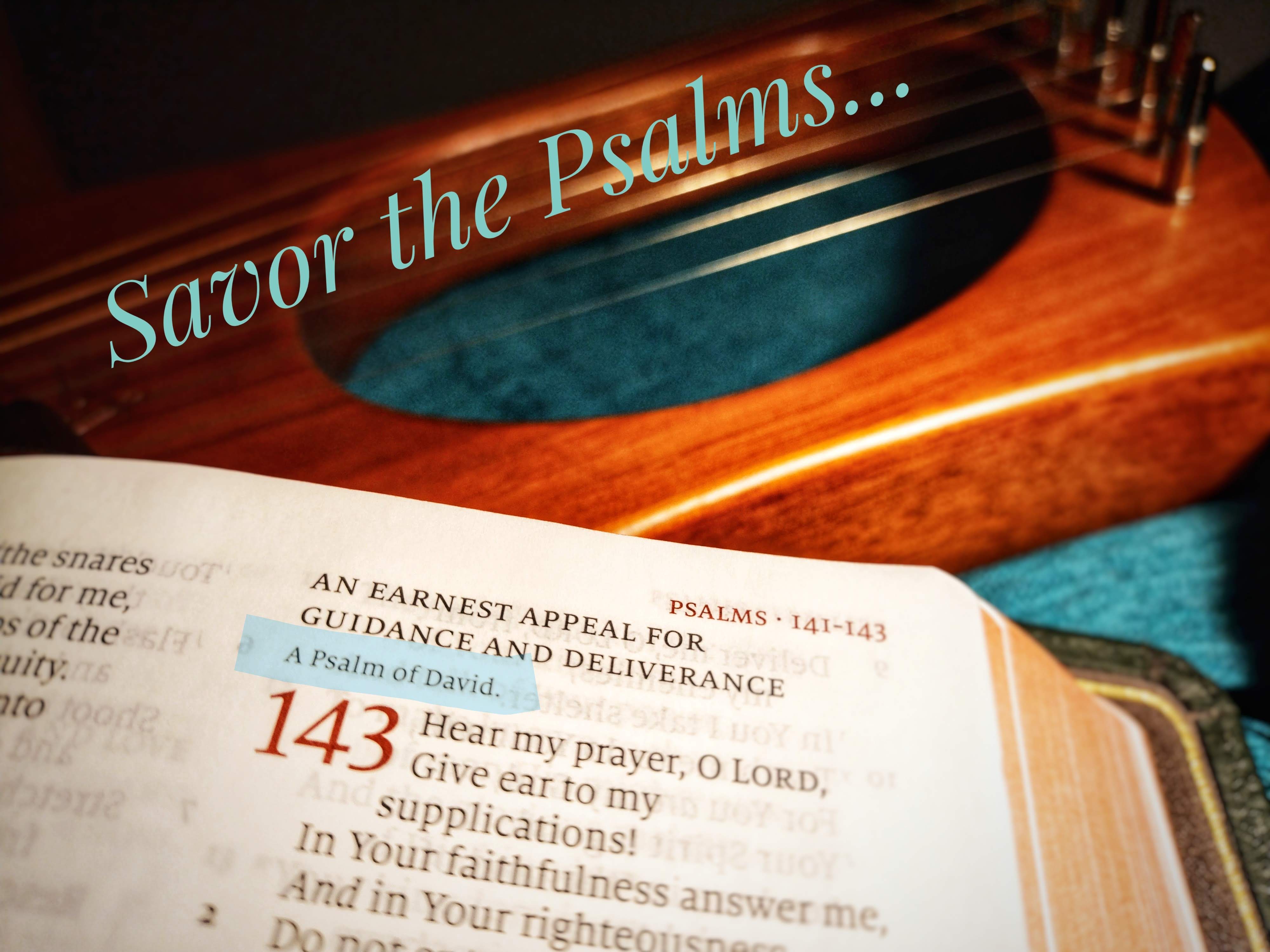
Much of the Bible – especially in the Old Testament was written in a poetic style. God inspired it that way. Our Creator likes good poetry – especially poetry that causes us to stop and think—the essence of digesting and applying God’s ways in our lives!
Divine poetry speaks powerfully to all ages and eras – including our own 21st century time frame. Imagine placing yourself as a “right there” listener to the lyrical and musical skills of King David!
An excellent writer, a marvelous poet, and the premier musician of his time—not only did King David compose music, he also invented musical instruments (see Nehemiah 12:36)! One instrument is mentioned here in Psalm 144:9:
“I will sing a new song to you, O God; On a harp of ten strings I will sing praises to You,…”
Furthermore, he was an inspired and faithful prophet of God—as well as being the great King of Israel. King David gave pen to many of the psalms, and likely some of the proverbs recorded in the Bible.
King David beautifully expressed the spiritual and emotional depth of how one perceives and responds to God and His way. When we read these poems they help us to shape our thoughts and emotions in a godly way.
Faithful expression
Note how Psalm 143, penned by King David, expresses his faithfulness, dedication and closeness to God as his Creator (and likewise ours). A classic example of how David responded to God in heartfelt, poetic prayer (this is merely an excerpt):
“I remember the days of old; I meditate on all your works; I muse on the work of Your hands. I spread out my hands to You; My soul longs for you like a thirsty land. Selah” (v. 5-6).
How essential is it for us to meditate on God’s works? To long for God and His perfect righteous way? In a world that is suffering a drought of godly thinking and obedience to the Ten Commandments, do we thirst for and prioritize obeying God in our lives?
Abundant imagery
Each psalm is a poetic (and oftentimes prophetic) message or prayer, often a plea to God. We also note that David wasn’t the only psalmist in Israel. However, from a human perspective he set the standard in his day and historically.
For example in Psalm 144 King David pleads with God for protection and asks for God’s blessings, described with beautiful imagery of agricultural abundance:
“Rescue me and deliver me from the hand of foreigners,
Whose mouth speaks lying words,
And whose right hand is a right hand of falsehood—
That our sons may be as plants grown up in their youth;
That our daughters may be as pillars, Sculptured in palace style;
That our barns may be full, Supplying all kinds of produce;
That our sheep may bring forth thousands And ten thousands in our fields;
That our oxen may be well laden; That there be no breaking in or going out; That there be no outcry in our streets.
Happy are the people who are in such a state; Happy are the people whose God is the Lord!” (Psalm 144:11-15)
In verse 14 is a plea that God will not send Israel into captivity, “…no breaking in or going out; …no outcry in our streets.”
As we know, after they split, both the northern Kingdom of Israel and the southern Kingdom of Judah were eventually taken captive by Assyria and Babylon, respectively. Therefore, this psalm also serves as a prophecy.
All of these complex themes are sewn together through very beautiful poetic verse.
Putting poetry to work
When you are at a loss for a Bible study subject or struggling to put your prayers into words, take one of the psalms and read it as though you are praying it personally. See where you can incorporate the words and phrases that do honor to God, magnify His greatness, and give voice to our hard-to-define thoughts and emotions.
Learn to savor the Psalms and they will enrich your prayers and communication with God!
-Randy Stiver
*If you wish to reprint this commentary or learn more about how to do so, please contact me in the comments below. I reserve my rights to this content, it is not in the public domain for use or reprint without my permission.
**All images are property of Amanda Stiver, unless otherwise noted. Please do not re-use without permission.
 The ArrowHead Journal