It was my great pleasure and God’s blessing that enabled me to attend a small private college just outside London, England for four years in the early 1970s.
Located in the beautiful English countryside within the county of Hertfordshire the British campus of Ambassador College was about a mile’s walk from the small train station in the village of Bricket Wood. From there one could take the local commuter train to St. Albans for shopping and meals out.
Significant history was made there. During the early centuries A.D., St. Albans was a strategic Roman city called Verulamium, and may well have been visited by certain of the twelve Apostles according to church histories of the first century.
The Bricket Wood “Bomber”
As students we affectionately nicknamed this local train the “Bricket Wood Bomber.” The moniker had to do with the rocking rhythm the train carriages produced as they rattled down the rails.
It ran only from Watford to St. Albans with several other stops besides Bricket Wood along the way. Via its main connection in Watford, this rail line could connect you to the fast train bound for the British capital of London or elsewhere.
Thanks to modestly priced train travel in the 1970s, as students we had remarkable opportunities to travel both directions many times.
This English campus of Ambassador College (funded and administered by the then, Worldwide Church of God) was one of three that existed at that time, the other two being in Pasadena, California and Big Sandy, Texas. With doctrinal confusion and departure, overtime, these one-time purposeful places of education in God’s way (summarized in the motto: “Recapturing True Values”) dwindled and then diminished until they no longer existed.
Just like that spur of railroad from one village to another only lasted so far, so then did God’s people have to choose to get on the right track moving forward.
Similarly, in the Church of God today, we must remember that we have purposefully chosen to live God’s way of life. We, by personal conviction, have committed ourselves to reject the false, sinful and evil ways of this world. We – even today – must strive to recapture those same true values (condensed in the Ten Commandments) in our thoughts, words, and actions.
Back to the Ambassador campus
Though now gone, the many decades-long tradition of Ambassador College (and later University) has still left a spiritual educational trail for our thoughtful consideration.
By being fully invested in the true faith of Jesus Christ we are, along with our fellow brethren in the faith, continuing that tradition of educating those who are seeking the truth of the Bible. But that collective commitment only comes as we personally stay focused on our calling and living by God’s instructions.
Let’s recommit our lives daily to God our Father and to Jesus our Savior. Pray fervently that God’s work of spreading the true gospel – the good news of the soon-coming Kingdom of God – be completed before Christ returns!
– Randy Stiver
*If you wish to reprint this commentary or learn more about how to do so, please contact me in the comments below. I reserve my rights to this content, it is not in the public domain for use or reprint without my permission.
**All images are property of Amanda Stiver, unless otherwise noted. Please do not re-use without permission.
People love to fish. That certainly includes America as well as many other countries.
Fishing has also been a high value activity for many faithful brethren in the true, historic Church of God. Many of Jesus Christ’s disciples then, as well as some today, actually exceled at fishing, giving the rest of Christ’s brethren something to stive for.
The apostles Peter, Andrew, James, and John, as well as their fathers, were professional fisherman at the Sea of Galilee. A region located in the interior of what had been the nation of Israel but was by this time, a few hundred years later, simply known as Galilee, the northern section of the Roman province of Judaea.
In fact, Jesus challenged His original disciples to excel in a special type of fishing, recorded in Mark 1:16-20 (see also, Matthew 4:18-20). Christ called these four to leave their fishing boats and follow Him to become “fishers of men.” Along with the rest of the twelve apostles—they became the leaders of a new kind of fishing industry, one that drew thousands to the knowledge of the true God and proclaimed the soon-coming Kingdom of God.
Sea of Galilee boats, from Ginosar, Israel.
Organizationally and personally, how can we be “fishers of men” in this end-time age?
The answer: See things as God sees them.
Study God’s Word well, and methodically, so that it comes out naturally and confidently in conversation. Strive to be a faithful, living example of God’s true way of life.
Watch world events and be aware of the signs leading up to Christ’s coming. Be alert for deception as it affects the culture we live in, and also, the greater Church of God. Learn to give an answer regarding the true Gospel of the Kingdom of God, the hope that lies within you. Explain the truth simply and clearly, so that a child could understand it (but don’t engage in angry or fruitless arguments).
Make the gospel of the Kingdom come alive in your mind and, by extension, in the minds of others. Christ, through His church casts a wide net, but we each, as we have opportunity, can plant a seed that may later lead to a greater catch.
-Randy Stiver
*If you wish to reprint this commentary or learn more about how to do so, please contact me in the comments below. I reserve my rights to this content, it is not in the public domain for use or reprint without my permission.
**All images are property of Amanda Stiver, unless otherwise noted. Please do not re-use without permission.
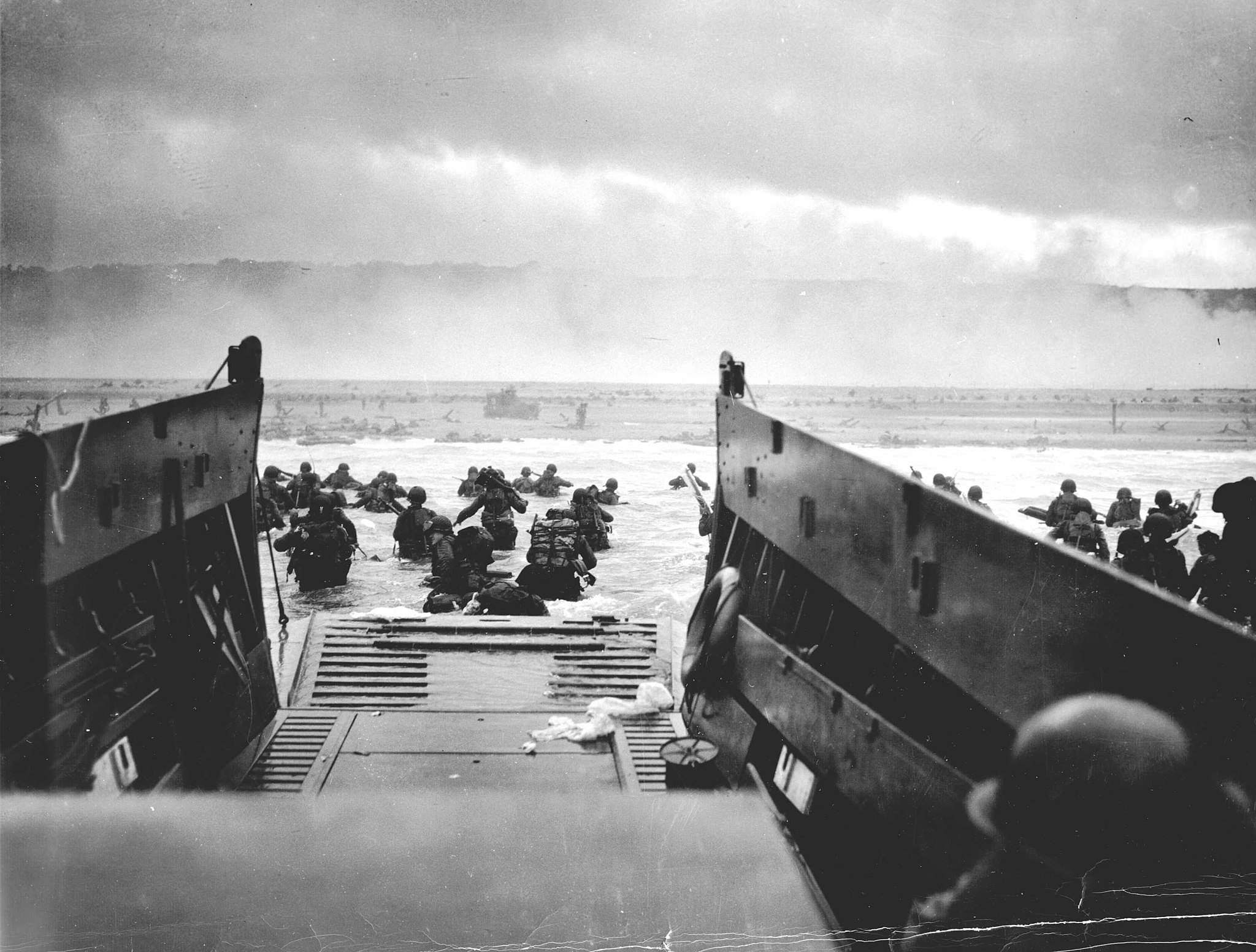
Chief Photographer’s Mate (CPHOM) Robert F. Sargent, U.S. Coast Guard, Public domain, via Wikimedia Commons
In the early morning hours of June 6, 1944, American armed forces and their allies stormed the beaches of Normandy on the west coast of France.
These sunny and beautiful beaches had become the western frontier of the Nazi army. Land which had been forcibly snatched from the hands of France by Germany in the early stages of World War Two.
Much like World War One before it, this second world war marked Germany’s second attempt in the 20th Century to conquer and carve a vast German empire out of Europe and wherever else it could reach. The fanatic Fuhrer’s end game was no less than world dominance… that is, until he died at his own fanatic hand.
40 years later
In June of 1984 American President Ronald Reagan spoke to an august gathering of U.S. and other World War 2 veterans at Pointe du Hoc along the Normandy coast where the American Rangers established their first European continental foothold. It was 40 years from the day of that famous Allied landing—leading to the freeing of Europe. The battle is often simply called “D-Day.”
D-Day today, 80 years on…
America, England, France and Germany, the rest of Europe and all other nations on earth are facing a dramatic potential for far flung war once again… potentially world war… fought with widespread use of nuclear weapons—and whatever other high-tech armaments that yet another team of scientists here or there can “cook-up.” A time of great trouble is brewing.
“For then there will be great tribulation, such as has not been since the beginning of the world until this time, no, nor ever shall be. And unless those days were shortened, no flesh would be saved; but for the elect’s sake those days will be shortened” (Matthew 24:21-22).
Laing A (Sgt), No 5 Army Film & Photographic Unit, Public domain, via Wikimedia Commons
The upheaval described by Jesus in this prophecy which He delivered to his disciples from the Mount of Olives in Jerusalem is referred to as the “Olivet Prophecy.” But with its parallel accounts in Mark 13 and Luke 21 it is the premiere prophecy of Christ’s second coming. Further, the prophetic details describe the conditions of our world and time today!
When President Reagan spoke on D-Day’s 40th anniversary he expressed the ideal of a lasting peace achieved by the sacrifice of WW2. However, those dynamics have changed. We are now forty years closer to the second coming – the frictions that portend world war have crystallized considerably. The immorality level of society approaches that of Sodom and Gomorrah of old.
The final war of all the nations is also forty years nearer. It brings the words of a great hymn into dramatic focus:
“How long Eternal hide Thou away? When will Thy wrath not burn like a fire? Wherefore hast Thou made all men in vain? Thou, God, remember, fleeting is life.”
Why Are You Here?
The world (that is, the Devil’s world) is sucking the power of God’s Holy Spirit out of the minds and hearts of the true brethren. It is destroying those who don’t resist. What can we do?
President Reagan asked the rhetorical question of the veterans on that D-Day anniversary in 1984: “Why? Why did you do it? What impelled you to put aside the instinct for self-preservation and risk your lives to take these cliffs?”
We, too, must ask ourselves, why am I here? To what have I committed my life?
You are here because you have been personally called by Jesus Christ to know and understand the plan that God is working out here below.
What next? Read the Bible!
Find those passages in Scripture that explain God’s process of calling and salvation for those He is calling now—which means you and me. Rediscover why you are here in the true Church of God now—today! Remember that “why”! Go back and do the first works!
The Kingdom of God is our goal forever and always!
*If you wish to reprint this commentary or learn more about how to do so, please contact me in the comments below. I reserve my rights to this content, it is not in the public domain for use or reprint without my permission.
**All images are property of Amanda Stiver, unless otherwise noted. Please do not re-use without permission.
As I walked out the front door there came a loud screeching as something airborne hit the top of my head, knocking my cap to the ground! Small bird sounds accompanied the airborne attack. What bird would actively engage against a human-height invader of her nest and babies?
It turns out it was a female robin defending her tiny home against all comers – and you can’t help but admire her put-your-life-on-the-line moxie! Over and over, she screeched and dived at any-and-all comers, particularly us, as we entered and exited through the front door. The only time she sat quietly in their nest of twigs atop the joint of a downspout was when her mate took over the defense of their babies.
However, Mrs. Robin had well and truly earned her nickname: “Kamikaze Mama.”
The actual Kamikaze
The original kamikaze were Japanese fighter pilots in World War Two. After the tide had turned and America and her allies had fought the Japanese armed forces in many countries and islands, the allies were ready to attack the Japanese mainland to finish the war.
In their effort to thwart the inevitable invasion of their island nation the Japanese air forces trained a host of young pilots to sacrifice themselves and their aircraft as flying bombs. This last-ditch force was called “Kamikaze” which means “divine wind.” They flew into battle not to possibly die, but to specifically die—and kill as many of their enemies as possible by crashing their planes into the Allied naval ships beneath them.
One can’t help but admire the tragic bravery and determination to preserve their national “nest” on the Japanese islands—as well as note their fearlessness in the face of the Allied counterparts they would meet in battle. War is a sad contradiction; sometimes the highest human ideals are employed for the worst possible outcomes, the destruction of one’s enemy.
Time perfects all weapons
Since then, many generations of nuclear-based and other advanced weaponry have been built and “perfected” for this awful purpose. If we were to figure the cost of World War Two fought today with our modern “death to all” weaponry – the toll would be even more appalling and staggering!
But all aspects of human warfare are profoundly sad. And this chapter was especially so. The Pacific land, sea, and air battles of World War Two ended by the deployment of atomic bombs on Japan.
Jeremiah, another of God’s spiritual battle-hardened prophets was inspired to precisely summarize humanity’s core failure: “O Lord, I know the way of man is not in himself; it is not in man who walks to direct his own steps” (Jeremiah 10:23).
In the near future, Jesus Christ at his second coming will intervene to block mankind’s self-destruction. He will initiate a new government called the Kingdom of God. He is inviting us to help oversee the making of new and wonderful history in the world tomorrow!
What lesson for us today?
What can our little, self-sacrificing Robin family teach us in relationship with the calamity of war?
God called us out of this present, evil world with its wars and tragedies, and into the knowledge of His great, soon-coming Kingdom and true way of life. We “signed up” through repentance and baptism into the true faith and service of our Lord and Savior, Jesus Christ. We fight against the evil of war by faithfully following God’s Law and becoming a living example of God’s way that is the precise opposite of war, destruction, and hate.
Even as our faithful birdy friends, Mr. and Mrs. Robin, are dedicated to giving their avian lives to the future of their babies… so, too, have we committed our lives to our Savior—who is also now our Lord and Master, high priest in heaven and soon-coming King—and to our eternal, spiritual Father in heaven! Treat that calling with the same intensity and protective self-sacrifice exemplified by this small aspect of God’s creation!
–Randy Stiver-
*If you wish to reprint this commentary or learn more about how to do so, please contact me in the comments below. I reserve my rights to this content, it is not in the public domain for use or reprint without my permission.
**All images are property of Amanda Stiver, unless otherwise noted. Please do not re-use without permission.
As a young fellow I cut my musical eye teeth on Country and Western music—especially western. The great folk-country singer Johnny Cash recorded a famous, western lament in 1957: “Don’t Take Your Guns to Town.” The famous “man in black” recorded a sad, haunting lament that made the tragic story come to life in the mind’s eye.
The old west scene was a distraught mother pleading with her over-confident and ill-advised son to leave his guns at home when he went to town. He didn’t listen—or didn’t heed (which is even worse).
When he got to town he went to the saloon and started drinking strong liquor, got into an argument with another cowboy who was quicker on the draw than he was. As the song goes, the tragic young man ended up dying on the barroom floor with his mama’s words on his lips… “don’t take your guns to town, son…”
And don’t take your mouth to Church son…
We have a saying that the song portrayed in principle: “don’t shoot off your mouth”.
The apostle James (in chapter three of his epistle) wrote about “the untamable tongue.” Likewise, as true Christians we must seek God’s help to tame our “tongues,” —that is tame what we say.
As faithful followers of Jesus Christ we must get serious about the vocal part of God’s way of life. “See how great a forest a little fire kindles! And the tongue is a fire, a world of iniquity…” (James 3:5-6).
What did James “draw on” for such dramatic—and at times, sad imagery? He used the analogy of actual fire—some of which appears even in our modern phraseology.
“Walk prudently when you go to the house of God; and draw near to hear rather than to give the sacrifice of fools, for they do not know that they do evil. Do not be rash with your mouth, and let not your heart utter anything hastily before God. For God is in heaven, and you are on earth; therefore let your words be few” (Ecclesiastes 5:1-2).
The heartbroken mother in the western song begged her son to leave his guns at home, to keep the flint and from igniting the powder. But her son wouldn’t listen.
And the moral of the story or the song is…
Always speak with kindness and outgoing concern for others—always. When we go to God’s true Church services on the Sabbath (that is by analogy to “God’s house”) let’s carefully and purposefully leave our sharp or unthoughtful words and that “untamable” part of our vocal apparatus at home.
Each Sabbath and annual holyday we have the opportunity to hear God’s Word preached… to hear how our brethren are thriving spiritually… to receive and share warm greetings and truly faith-filled conversation.
Savor the incredible calling of God that brought and brings us to His Sabbath services. Draw strength from good fellowship, and especially, humbly savor the sound preaching from God’s own word. Listen, learn and as another apostle was inspired to write “grow in the grace and knowledge of our Lord Jesus Christ”!
Bring true, spiritually converted words to Sabbath services and throughout the week that follows!
*If you wish to reprint this commentary or learn more about how to do so, please contact me in the comments below. I reserve my rights to this content, it is not in the public domain for use or reprint without my permission.
**All images are property of Amanda Stiver, unless otherwise noted. Please do not re-use without permission.
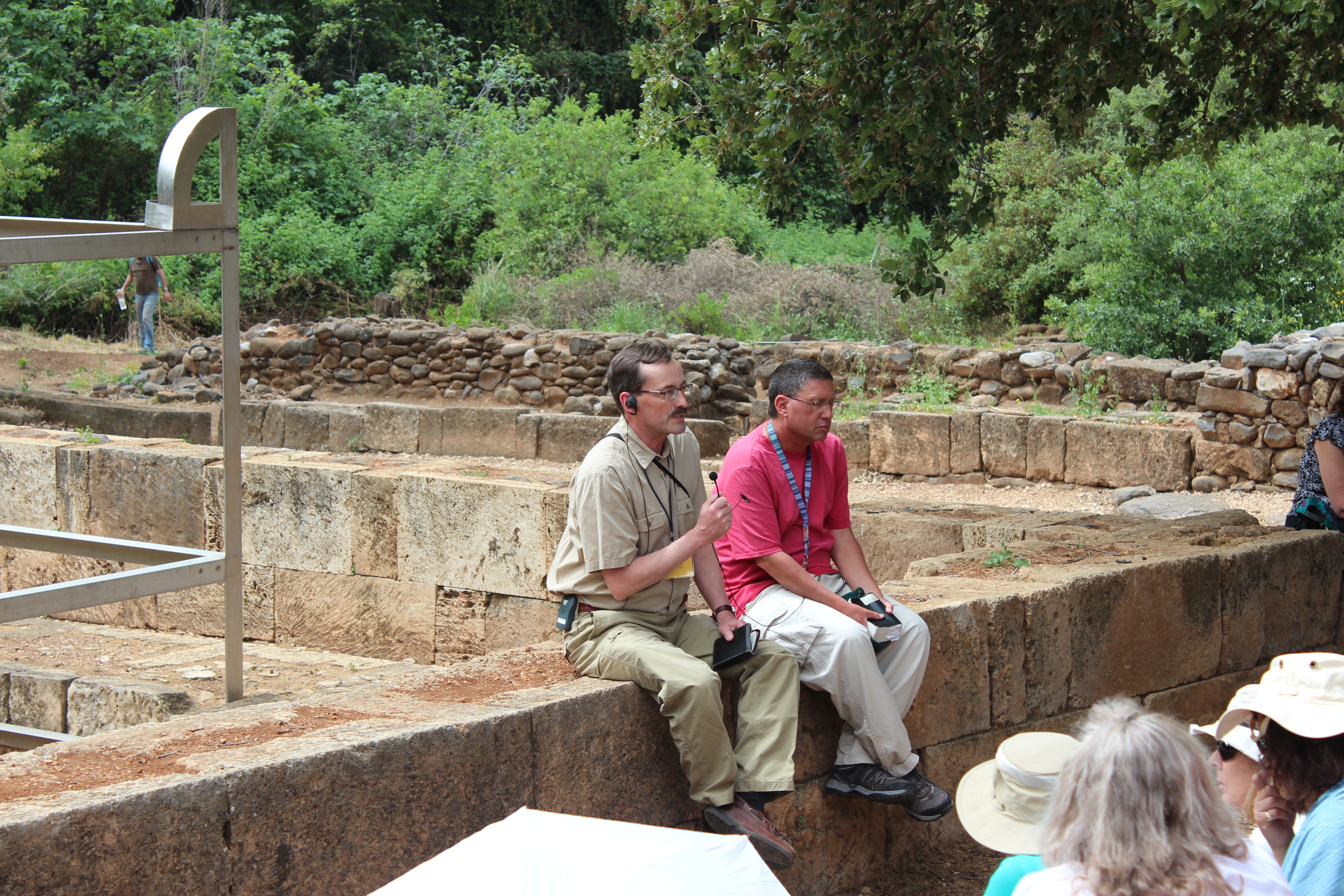
The author, left, lecturing at Tel Dan in northern Israel, 2014. To the left of the speaker is a metal structure, a replica of the “high place” or “bama”, which was a profane altar used by the religious elites of the northern Kingdom of Israel in place of true worship at the Temple in Jerusalem. They were doing “the God thing” their way, but it didn’t end well. They fell into captivity to the Assyrian Empire in approx. 732 B.C.
The second law of thermodynamics: “Everything tends to run down,” should speak volumes to all who claim to be God’s faithful children. Doing “the God thing” on our own terms, the outward appearance of compliance to God’s way, is a non-starter! Mankind has been trying to do their version of “the God thing” by their definition since Adam and Eve.
Our world of the 2020s is culturally similar to the world of the 1920s. A century ago World War One had spawned or advanced numerous technologies which accelerated the pace of culture noticeably. Those many war-born advancements created an aura of technological utopia where man was master of all.
Also born of that era was the practice of teaching the theory of evolution as man’s origin in the classroom. Man was doing “the God thing”, with himself as god.
But man was still the master of nothing
When the economic tentacles of the Great Depression reached out and spread its poison the seeds of World War Two sprouted and blossomed—in a depressingly horrible and predictable way. Millions of lives were lost in the fanaticism, fighting and persecution. Menacing dictators across the globe were doing “the God thing” with themselves as the deity.
Again, the Scriptural assessment proved true: “O Lord, I know the way of man is not in himself; It is not in man who walks to direct his own steps” (Jeremiah 10:23).
In short, man’s steps were not meant to be from war to war to war…!
Living God’s way today
Doing “the God thing” obviously wasn’t working. Was the problem with God—in no way! From the Garden of Eden onward, it was mankind who refused to fully obey and follow God.
Aside from Jesus Christ of Nazareth, no human ever perfectly followed God’s way. However, logged in Scripture are the examples of a fair number of the truly faithful who lived their lives in the genuine pursuit of their Savior. Their lives are memorialized in the eleventh chapter – which is the faith chapter of the book of Hebrews. These faithful ones God bolstered and supported as they sought to do His work and to live by His law and way of life.
If we aspire to do “the God thing”, that is to say, live a godly life in genuine conviction of God’s true way as delineated in His Word, the Bible, we must be sure that we do so in humility, sincerity, and in truth before our Creator. Any other way, no matter how appealing, is simplynot God’s way!
*If you wish to reprint this commentary or learn more about how to do so, please contact me in the comments below. I reserve my rights to this content, it is not in the public domain for use or reprint without my permission.
**All images are property of Amanda Stiver, unless otherwise noted. Please do not re-use without permission.
Never underestimate the power of God’s annual spring festival of Passover and the seven Days of Unleavened Bread!
However, have you thought about the fact that our spring holydays occur during the autumn south of the equator? And by “they,” I mean Jesus Christ’s true brethren who live “down under” in Australia, New Zealand, parts of southern Asia, southern Africa, and most of South America.
Stretch your mind a bit as we reflect on their experience of the “spring” holydays. It’s good to visualize how our southerly brethren live, work… and of course keep God’s holydays and the Sabbath. This helps us to pray for them more effectively when we read the news and events that are occurring in their part of the world.
Most importantly, they have developed the skill of transposing the spiritual lessons of the Days of Unleavened Bread from springtime in the northern hemisphere to their southerly locations during autumn.
Do we carry with us a clear understanding of the annual holydays and their personal and prophetic meaning? Let’s review all seven commanded assemblies as we are about to progress through the whole cycle again this year, starting with Passover and the Days of Unleavened Bread.
To each Holyday its meaning
God the Father and Jesus Christ established the annual, divine holydays. The meaning of each of God’s annual festivals is critical to our understanding and faithfulness as true Christians in a terribly unfaithful world. God’s annual holydays portray fascinating and vital lessons as we worship the true God of the Holy Scripture.
As mentioned above, the Biblical events took place and were recorded from the perspective of the land of Israel, which is in the northern hemisphere. And it is to that land, and specifically the city of Jerusalem that Christ will return, which is why our southern hemisphere brethren keep the holydays on the same schedule as we do, even though the seasons are reversed.
Passover – Our Savior Jesus Christ gave His life to pay the penalty of our sins (and the sins of all who will repent when God calls them to the knowledge of the truth). Thus we observe Passover each spring. It’s meaning is that we fully dedicate our lives to genuine repentance and to faithfully follow Christ, the Head of the true Church of God.
The Night to Be Much Remembered – The evening, at sunset, on which the first Day of Unleavened Bread begins is a special night (not to be confused with the Passover) in which we share a meal with God’s people and reflect on the solemn meaning of Israel being released by God from captivity in Egypt. Though not an annual Sabbath service, this night pictures the beginning of our own process of coming out of our personal ‘Egypt’ of slavery to sin.
Days of Unleavened Bread – Immediately following the Passover, this seven-day festival illustrates critical lessons about overcoming sin by putting it out of our lives. During this festival sin is symbolized by the leavening we typically use to leaven our bread during the rest of the year. Even as leavening puffs bread up—so vanity and all other kinds of sin puff up our egos—which fosters sinful arrogance in our minds. Even as Christ gave His life for our sins, so we must humbly dedicate our lives in Him to overcome sin and the sinful pulls of this present, evil world.
Day of Pentecost– This annual Sabbath anticipates the ultimate outpouring of God’s Holy Spirit on all who truly repent of their sins. Since it’s only possible to fully overcome sin through the power of God’s Spirit we must repent, and then be baptized by one of Christ’s true ministers in order to receive God’s Spirit via the “laying on of hands” ceremony. Through the power of God’s Holy Spirit we can then grow in grace and knowledge of God and His way. That overcoming process leads ultimately to our resurrection and eternal life in the Kingdom of God.
The annual holydays of autumn
Jesus Christ and God, the Father designed and established the annual Sabbaths to rehearse the divine plan of salvation for all mankind from Adam to the last baby born! In that sense, the physical creation anticipates God’s divine plan of salvation. These last four holydays that take place in the autumn foreshadow many things to come that are recorded in the prophetic portions of the Bible.
The Feast of Trumpets – This day comes in the early autumn and pictures the second coming of Jesus Christ. At His first coming Christ came to be our Savior – the sacrifice for our sins which He fulfilled by dying in our place. Remember, “the wages of sin is death” (Romans 6:23).
At His second coming the great Messiah returns to establish the Kingdom of God on earth. The true saints (those who are Christ’s at His coming) will then be resurrected to eternal life. Christ is King of Kings and Lord of Lords—the destiny of the fully repentant of humanity is to live forever serving faithfully under Christ and the Father. The dynamic presence of our great Savior in the world tomorrow will change every sinful aspect of human culture.
Day of Atonement – This annual holyday of fasting is kept in anticipation of God’s eternal judgment on Satan the Devil and his fallen demonic angels. This sobering day reminds us of the deadly seriousness of the Devil in his actions against us. A reflective day of fasting, but a glorious day of spiritual victory!
Feast of Tabernacles – With this holy festival we commemorate with great joy the literal era to come when all people living will be called to spiritual repentance—and when Christ will rule the nations directly. He will rule over all the nations on earth for the Millennium (1000 years). It will be the day of salvation for all who live then.
And finally,…
The Last Great Day – Picturing the time when all who have lived, but never knew or understood God’s truth are called to true spiritual salvation in Christ. They will come up in the “second resurrection” to live another lifetime in which to understand God’s way without the confusion of Satan’s deception. To be clear, this will be their first time, by God’s reckoning, to comprehend true salvation, and to choose life. Not a second chance.
Whether we and our brethren live in the north, south, east or west, through our great Savior Jesus Christ we thank God and savor His wonderful plan of salvation for all who will choose it and live it! Keep this in mind as we commemorate the Passover, the holyday that makes all the others possible!
*If you wish to reprint this commentary or learn more about how to do so, please contact me in the comments below. I reserve my rights to this content, it is not in the public domain for use or reprint without my permission.
**All images are property of Amanda Stiver, unless otherwise noted. Please do not re-use without permission.
The young, South Dakota farm boy raced across the prairie to catch a long fly ball. But he tripped, as boys do, landing hands first in a prickly pear cactus. That time he ended up with more than a hundred tiny thorns shed by the cactus into his palms and forearms. Most were carefully tweezered out, but those remaining sharply reminded him of their presence every time he picked up the baseball or his bat for the next several days!
Have you ever had an actual, physical thorn in the flesh? How about a spiritual thorn?
Paul
One of God’s early church leaders had such a thorn. Listen to the apostle Paul tell his story.
“And lest I should be exalted above measure by the abundance of the revelations, a thorn in the flesh was given to me, a messenger of Satan to buffet me, lest I be exalted above measure” (2 Cor. 12:7).
What was Paul’s thorn? Did he get it at birth, childhood or perhaps as an adult? The fact that it was “given” to him indicates that Jesus Christ personally gave or allowed Paul to receive this very, pointedly trying “gift.”
Early Paul
Remember, Paul started out as a Pharisee, a sect of the Jews that chose to be an enemy of God’s truth. Paul epitomized the sect as a “fire-breathing persecutor of the Christ’s brethren. He infamously presided over the trial and execution of Stephen, one of Christ’s original deacons in Jerusalem (see Acts 6:8-15, and chapter 7).
Paul further organized a sort of secret police among the Jews to seek out, arrest, try and then beat or imprison numbers of true Church brethren—men and women—in and around Jerusalem (see Acts 8:1-3).
The road to Damascus
Not satisfied with that, Paul obtained letters of extradition and pursued church members on the road to Damascus in Syria. There he planned to personally lead an arresting posse to capture and take them back to Jerusalem for harsh punishment. And for why? They were punished for their “heresy” of repenting and believing what the Bible taught about the true Messiah, Jesus of Nazareth and subsequently spreading the gospel of the Kingdom of God.
Suddenly, like a bolt out of the blue, Jesus Christ struck Paul blind on the road to Damascus and calling Paul by his Jewish name, “Saul, Saul, why are you persecuting Me?” (Acts 9:3-8). This dramatic event motivated Paul’s repentance and conversion, leading ultimately to his service as an apostle in the ministry.
Time for the thorn in the flesh
Much later as one of God’s great apostles, Paul reflected on a thorn in the flesh gifted him by Christ. It was a thorn from which he sought relief… “Concerning this thing I pleaded with the Lord three times that it might depart from me. 9 And He said to me, ‘My grace is sufficient for you, for My strength is made perfect in weakness.’ Therefore most gladly I will rather boast in my infirmities, that the power of Christ may rest upon me.” (2 Cor. 12:8-9)
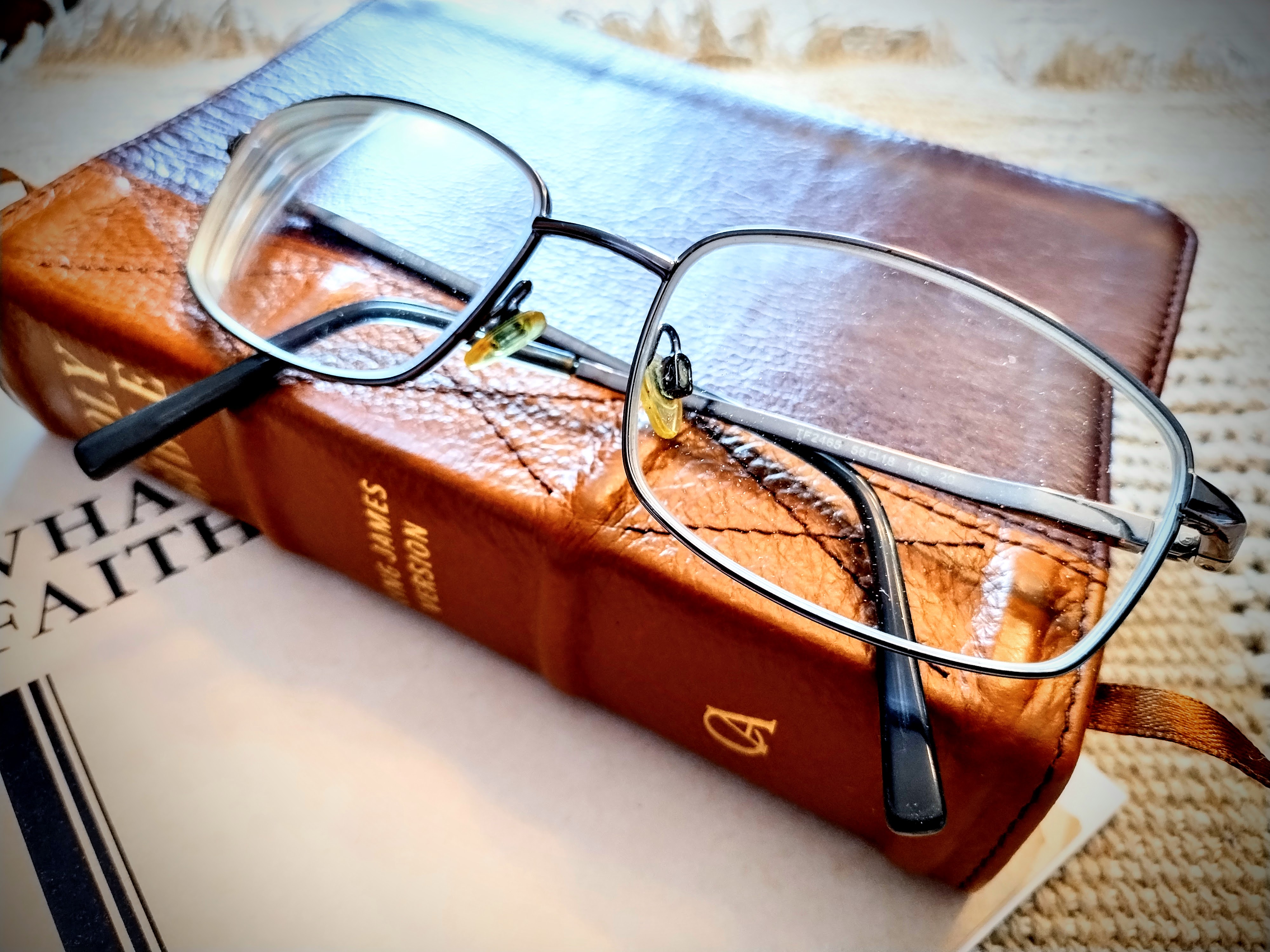
Although we can’t precisely pin down Paul’s poor eyesight as his “thorn in the flesh,” but a true scholar like him needed to read books and people. Before the age of corrective lenses bad vision could be seriously humbling. At the merciful hands of Christ on the road to Damascus, Paul the Pharisee learned a massive lesson of true humility to help him become Paul the Apostle.
“Therefore I take pleasure in infirmities, in reproaches, in needs, in persecutions, in distresses, for Christ’s sake. For when I am weak, then I am strong” (2 Cor. 12:10).
As we approach the Passover and Days of Unleavened Bread, ask God to show you how to use your thorn in the flesh for growth and overcoming. Learn from Paul’s lesson and you, too, can become stronger!
Originally written: January 2, 2021
*If you wish to reprint this commentary or learn more about how to do so, please contact me in the comments below. I reserve my rights to this content, it is not in the public domain for use or reprint without my permission.
**All images are property of Amanda Stiver, unless otherwise noted. Please do not re-use without permission.
As a youngster there was a scripture that echoed in my adolescent mind…
“Behold, how good and how pleasantit is for brethren todwell together in unity!” (Psalm 133:1).
This was a passage that was impressed upon me by my grandmother, Alice Bissell, a longtime true Church of God member. My earliest such memories, around age five, were of attending Sabbath services with “Grammy”, on Saturday, in Portland, Oregon. She even began to teach me how to take notes during church—which initially meant writing down the scripture references and listening carefully to whichever of God’s ministers was speaking that day.
Lessons learned
Among the many instructions I absorbed this way, I realized that it’s critically important for us to become experts in the function of the carnal mind. By “carnal” the Bible means… physically and selfishly oriented and unrepentant. Also note this definition: “Because the carnalmindis enmity against God; for it is not subject to the law of God, nor indeed can be” (Romans 8:7).
I learned that a person who was “carnal” had not yet repented of his or her sins and thus had not yet receive God’s Holy Spirit. Therefore, such were still unconverted. That lesson was imparted to my young mind at about age eight, in the late 1950’s, when my grandmother took me to the combined, Day of Pentecost holyday service at a park just north of the Columbia River, which forms the state line between Oregon and Washington.
Baptism commitment
After we had eaten lunch with more than two hundred other brethren, my grandmother pointed to a bend in the stream, back under the shade of many trees where the ministers were baptizing (through brief, but full immersion in the water) some new brethren whom they had recently counseled and deemed ready to become members of God’s Church. Some were older and some younger, in their late teens or early 20s.
She sent me with one of the older men in the Church to where we could watch the baptisms along with the others who were also witnessing this important ceremony as each newly repentant member waited for his or her turn. Other children my age were also watching since, in some cases, their parents were being baptized. It was at that time I realized that one day when I was a fair bit older than eight, I too, must be baptized.
Individual commitment strengthens the whole Body of Christ
With lunch and the baptisms completed, I visited with several youngsters my age until the afternoon service was about to start. Another dawning: I now had friends in God’s Church—and would have many more to come!
The afternoon sermon was even clearer than the one in the morning. Later, on the way home “Grammy” reviewed what we had heard and learned. It would be another ten years before I was baptized during my first year at Ambassador College, at the Bricket Wood campus in England. However, the seeds of God’s truth and faithfulness were planted well and deeply at that county park in southern Washington state on that special Pentecost.
Historically speaking—when the majority of the ministry and brethren are faithful—God’s Church grows in the process of doing His work of preaching the true gospel and preparing for the soon coming of our great Lord and Savior Jesus Christ. Thus, it is vitally important that we each individually remain diligently faithful to the teachings that God has recorded for us in His Word, the Bible.
Keep the true faith—and spread it!
*If you wish to reprint this commentary or learn more about how to do so, please contact me in the comments below. I reserve my rights to this content, it is not in the public domain for use or reprint without my permission.
**All images are property of Amanda Stiver, unless otherwise noted. Please do not re-use without permission.
Are you a wise son or daughter of God? And likewise, are the organizations of God’s true Church collectively wise sons and daughters of God the Father?
Sometimes, we claim the title of God’s children simply because we have the knowledge base of God’s Word. But is merely claiming that knowledge enough?
Remember, “…to him who knows to do good and does not do it, to him it is sin,” (James 4:17). A truly, biblically wise person would recognize and embrace the responsibility to constantly reflect the goodness and kindness of God’s way of life by faithfully living it!
Ultimate insight
The tenth chapter of Proverbs launches the third collection of God’s shorter statements of wisdom that form the Book of Proverbs. Commentators usually recognize nine of these proverbial collections.
Very often the Proverbs refer to God’s faithful followers as His sons and daughters. The historic, true Church of God is certainly the vital part of God’s true children in this age of history.
Blind to true wisdom
Yet traditional Christianity and Judaism also lay claim to the Proverbs and God’s Word generally. Although they are closer than the rank and file of pagan or secular mankind, they presently, and quite frankly, greatly misunderstand the eternal aspects of God’s wisdom.
Now this misunderstanding or “blindness” will be taken away by Christ at His second coming, but until that happens only the relative few of the spiritual Body of Christ actually have clear-minded access to the profound wisdom of God!
The veil of spiritual blindness refers to the Israelites of old who carnally rejected God’s way: “But their minds were blinded. For until this day the same veil remains unlifted in the reading of the Old Testament, because the veil is taken away in Christ. 15But even to this day, when Moses is read, a veil lies on their heart. 16Nevertheless when one turns to the Lord, the veil is taken away” (2 Cor. 3:14-15).
To the vast bulk of mankind, the true wisdom of God is simply not understood yet!
Of course, that’s obvious to us who have been (or are being) called by God to true repentance, baptism and spiritual conversion. We know that because we know God’s truth, we are divinely expected to obey and live by it!
Great expectation
It is a wonderful calling, a great calling and great expectation that God has given us!
We, by our actions, words and very thoughts represent the Kingdom of God on earth. God the Father expects us to be wise sons and daughters in the true faith of His Son. Seek the fathomless wisdom of God to truly be a spiritually wise son or daughter of the Most High God!
Originally written: March 6, 2021
*If you wish to reprint this commentary or learn more about how to do so, please contact me in the comments below. I reserve my rights to this content, it is not in the public domain for use or reprint without my permission.
**All images are property of Amanda Stiver, unless otherwise noted. Please do not re-use without permission.












 The ArrowHead Journal