
The Lesson of the ‘Kamikaze’ Mama Robin!

As I walked out the front door there came a loud screeching as something airborne hit the top of my head, knocking my cap to the ground! Small bird sounds accompanied the airborne attack. What bird would actively engage against a human-height invader of her nest and babies?

It turns out it was a female robin defending her tiny home against all comers – and you can’t help but admire her put-your-life-on-the-line moxie!  Over and over, she screeched and dived at any-and-all comers, particularly us, as we entered and exited through the front door. The only time she sat quietly in their nest of twigs atop the joint of a downspout was when her mate took over the defense of their babies.

However, Mrs. Robin had well and truly earned her nickname: “Kamikaze Mama.”

The actual Kamikaze

The original kamikaze were Japanese fighter pilots in World War Two. After the tide had turned and America and her allies had fought the Japanese armed forces in many countries and islands, the allies were ready to attack the Japanese mainland to finish the war.

In their effort to thwart the inevitable invasion of their island nation the Japanese air forces trained a host of young pilots to sacrifice themselves and their aircraft as flying bombs. This last-ditch force was called “Kamikaze” which means “divine wind.” They flew into battle not to possibly die, but to specifically die—and kill as many of their enemies as possible by crashing their planes into the Allied naval ships beneath them.

One can’t help but admire the tragic bravery and determination to preserve their national “nest” on the Japanese islands—as well as note their fearlessness in the face of the Allied counterparts they would meet in battle. War is a sad contradiction; sometimes the highest human ideals are employed for the worst possible outcomes, the destruction of one’s enemy.

Time perfects all weapons

Since then, many generations of nuclear-based and other advanced weaponry have been built and “perfected” for this awful purpose. If we were to figure the cost of World War Two fought today with our modern “death to all” weaponry – the toll would be even more appalling and staggering!

But all aspects of human warfare are profoundly sad. And this chapter was especially so. The Pacific land, sea, and air battles of World War Two ended by the deployment of atomic bombs on Japan.

Jeremiah, another of God’s spiritual battle-hardened prophets was inspired to precisely summarize humanity’s core failure:  “O Lord, I know the way of man is not in himself; it is not in man who walks to direct his own steps” (Jeremiah 10:23).

In the near future, Jesus Christ at his second coming will intervene to block mankind’s self-destruction. He will initiate a new government called the Kingdom of God. He is inviting us to help oversee the making of new and wonderful history in the world tomorrow!  

What lesson for us today?

What can our little, self-sacrificing Robin family teach us in relationship with the calamity of war?

God called us out of this present, evil world with its wars and tragedies, and into the knowledge of His great, soon-coming Kingdom and true way of life. We “signed up” through repentance and baptism into the true faith and service of our Lord and Savior, Jesus Christ. We fight against the evil of war by faithfully following God’s Law and becoming a living example of God’s way that is the precise opposite of war, destruction, and hate.

Even as our faithful birdy friends, Mr. and Mrs. Robin, are dedicated to giving their avian lives to the future of their babies… so, too, have we committed our lives to our Savior—who is also now our Lord and Master, high priest in heaven and soon-coming King—and to our eternal, spiritual Father in heaven! Treat that calling with the same intensity and protective self-sacrifice exemplified by this small aspect of God’s creation!

Randy Stiver-

*If you wish to reprint this commentary or learn more about how to do so, please contact me in the comments below. I reserve my rights to this content, it is not in the public domain for use or reprint without my permission.

**All images are property of Amanda Stiver, unless otherwise noted. Please do not re-use without permission.

Don’t Take Your Mouth to Church, Son…

As a young fellow I cut my musical eye teeth on Country and Western music—especially western. The great folk-country singer Johnny Cash recorded a famous, western lament in 1957: “Don’t Take Your Guns to Town.” The famous “man in black” recorded a sad, haunting lament that made the tragic story come to life in the mind’s eye.

The old west scene was a distraught mother pleading with her over-confident and ill-advised son to leave his guns at home when he went to town. He didn’t listen—or didn’t heed (which is even worse).

When he got to town he went to the saloon and started drinking strong liquor, got into an argument with another cowboy who was quicker on the draw than he was. As the song goes, the tragic young man ended up dying on the barroom floor with his mama’s words on his lips… “don’t take your guns to town, son…”

And don’t take your mouth to Church son…

We have a saying that the song portrayed in principle: “don’t shoot off your mouth”.

The apostle James (in chapter three of his epistle) wrote about “the untamable tongue.” Likewise, as true Christians we must seek God’s help to tame our “tongues,” —that is tame what we say.

As faithful followers of Jesus Christ we must get serious about the vocal part of God’s way of life. “See how great a forest a little fire kindles! And the tongue is a fire, a world of iniquity…” (James 3:5-6).

What did James “draw on” for such dramatic—and at times, sad imagery? He used the analogy of actual fire—some of which appears even in our modern phraseology.

“Walk prudently when you go to the house of God; and draw near to hear rather than to give the sacrifice of fools, for they do not know that they do evil. Do not be rash with your mouth, and let not your heart utter anything hastily before God. For God is in heaven, and you are on earth; therefore let your words be few” (Ecclesiastes 5:1-2).

The heartbroken mother in the western song begged her son to leave his guns at home, to keep the flint and from igniting the powder. But her son wouldn’t listen.

And the moral of the story or the song is…

Always speak with kindness and outgoing concern for others—always. When we go to God’s true Church services on the Sabbath (that is by analogy to “God’s house”) let’s carefully and purposefully leave our sharp or unthoughtful words and that “untamable” part of our vocal apparatus at home.

Each Sabbath and annual holyday we have the opportunity to hear God’s Word preached… to hear how our brethren are thriving spiritually… to receive and share warm greetings and truly faith-filled conversation.

Savor the incredible calling of God that brought and brings us to His Sabbath services. Draw strength from good fellowship, and especially, humbly savor the sound preaching from God’s own word. Listen, learn and as another apostle was inspired to write “grow in the grace and knowledge of our Lord Jesus Christ”!

Bring true, spiritually converted words to Sabbath services and throughout the week that follows!

*If you wish to reprint this commentary or learn more about how to do so, please contact me in the comments below. I reserve my rights to this content, it is not in the public domain for use or reprint without my permission.

**All images are property of Amanda Stiver, unless otherwise noted. Please do not re-use without permission.

Beware of Just Doing – “The God Thing”

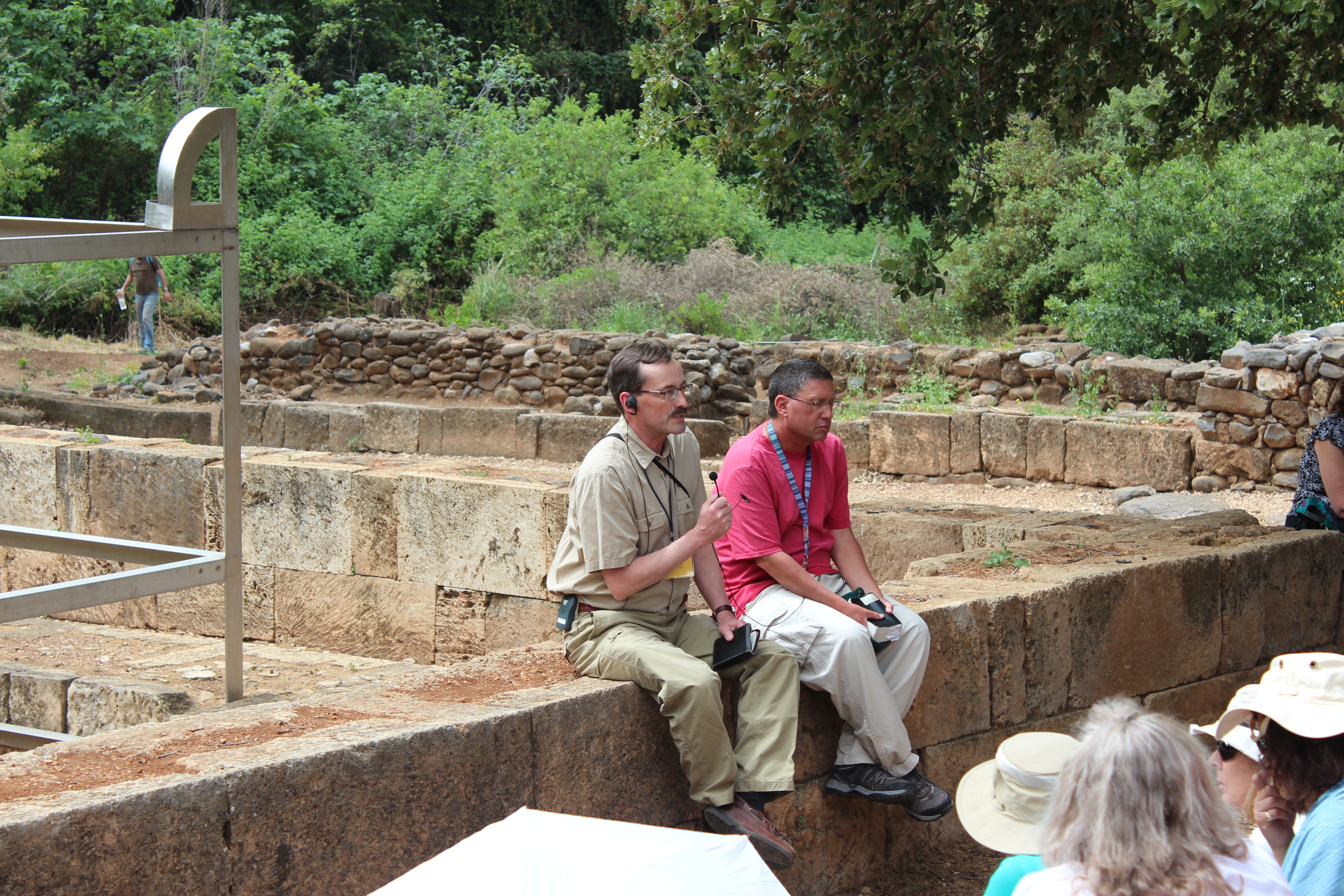
The author, left, lecturing at Tel Dan in northern Israel, 2014. To the left of the speaker is a metal structure, a replica of the “high place” or “bama”, which was a profane altar used by the religious elites of the northern Kingdom of Israel in place of true worship at the Temple in Jerusalem. They were doing “the God thing” their way, but it didn’t end well. They fell into captivity to the Assyrian Empire in approx. 732 B.C.

The second law of thermodynamics: “Everything tends to run down,” should speak volumes to all who claim to be God’s faithful children. Doing “the God thing” on our own terms, the outward appearance of compliance to God’s way, is a non-starter! Mankind has been trying to do their version of “the God thing” by their definition since Adam and Eve.

Our world of the 2020s is culturally similar to the world of the 1920s. A century ago World War One had spawned or advanced numerous technologies which accelerated the pace of culture noticeably. Those many war-born advancements created an aura of technological utopia where man was master of all.

Also born of that era was the practice of teaching the theory of evolution as man’s origin in the classroom. Man was doing “the God thing”, with himself as god.

But man was still the master of nothing

When the economic tentacles of the Great Depression reached out and spread its poison the seeds of World War Two sprouted and blossomed—in a depressingly horrible and predictable way. Millions of lives were lost in the fanaticism, fighting and persecution. Menacing dictators across the globe were doing “the God thing” with themselves as the deity.

Again, the Scriptural assessment proved true: “O Lord, I know the way of man is not in himself; It is not in man who walks to direct his own steps” (Jeremiah 10:23).

In short, man’s steps were not meant to be from war to war to war…!

Living God’s way today

Doing “the God thing” obviously wasn’t working. Was the problem with God—in no way! From the Garden of Eden onward, it was mankind who refused to fully obey and follow God.

Aside from Jesus Christ of Nazareth, no human ever perfectly followed God’s way. However, logged in Scripture are the examples of a fair number of the truly faithful who lived their lives in the genuine pursuit of their Savior. Their lives are memorialized in the eleventh chapter – which is the faith chapter of the book of Hebrews. These faithful ones God bolstered and supported as they sought to do His work and to live by His law and way of life.

If we aspire to do “the God thing”, that is to say, live a godly life in genuine conviction of God’s true way as delineated in His Word, the Bible, we must be sure that we do so in humility, sincerity, and in truth before our Creator. Any other way, no matter how appealing, is simply not God’s way!

*If you wish to reprint this commentary or learn more about how to do so, please contact me in the comments below. I reserve my rights to this content, it is not in the public domain for use or reprint without my permission.

**All images are property of Amanda Stiver, unless otherwise noted. Please do not re-use without permission.

Passover in the Autumn South of the Equator: The Meaning of God’s Holydays Doesn’t Change!

Never underestimate the power of God’s annual spring festival of Passover and the seven Days of Unleavened Bread!

However, have you thought about the fact that our spring holydays occur during the autumn south of the equator? And by “they,” I mean Jesus Christ’s true brethren who live “down under” in Australia, New Zealand, parts of southern Asia, southern Africa, and most of South America.

Stretch your mind a bit as we reflect on their experience of the “spring” holydays. It’s good to visualize how our southerly brethren live, work… and of course keep God’s holydays and the Sabbath. This helps us to pray for them more effectively when we read the news and events that are occurring in their part of the world.

Most importantly, they have developed the skill of transposing the spiritual lessons of the Days of Unleavened Bread from springtime in the northern hemisphere to their southerly locations during autumn.

Do we carry with us a clear understanding of the annual holydays and their personal and prophetic meaning? Let’s review all seven commanded assemblies as we are about to progress through the whole cycle again this year, starting with Passover and the Days of Unleavened Bread.

To each Holyday its meaning

God the Father and Jesus Christ established the annual, divine holydays. The meaning of each of God’s annual festivals is critical to our understanding and faithfulness as true Christians in a terribly unfaithful world. God’s annual holydays portray fascinating and vital lessons as we worship the true God of the Holy Scripture.

As mentioned above, the Biblical events took place and were recorded from the perspective of the land of Israel, which is in the northern hemisphere. And it is to that land, and specifically the city of Jerusalem that Christ will return, which is why our southern hemisphere brethren keep the holydays on the same schedule as we do, even though the seasons are reversed.

Passover – Our Savior Jesus Christ gave His life to pay the penalty of our sins (and the sins of all who will repent when God calls them to the knowledge of the truth). Thus we observe Passover each spring. It’s meaning is that we fully dedicate our lives to genuine repentance and to faithfully follow Christ, the Head of the true Church of God.

The Night to Be Much Remembered – The evening, at sunset, on which the first Day of Unleavened Bread begins is a special night (not to be confused with the Passover) in which we share a meal with God’s people and reflect on the solemn meaning of Israel being released by God from captivity in Egypt. Though not an annual Sabbath service, this night pictures the beginning of our own process of coming out of our personal ‘Egypt’ of slavery to sin.

Days of Unleavened Bread – Immediately following the Passover, this seven-day festival illustrates critical lessons about overcoming sin by putting it out of our lives. During this festival sin is symbolized by the leavening we typically use to leaven our bread during the rest of the year. Even as leavening puffs bread up—so vanity and all other kinds of sin puff up our egos—which fosters sinful arrogance in our minds. Even as Christ gave His life for our sins, so we must humbly dedicate our lives in Him to overcome sin and the sinful pulls of this present, evil world.

Day of Pentecost – This annual Sabbath anticipates the ultimate outpouring of God’s Holy Spirit on all who truly repent of their sins. Since it’s only possible to fully overcome sin through the power of God’s Spirit we must repent, and then be baptized by one of Christ’s true ministers in order to receive God’s Spirit via the “laying on of hands” ceremony. Through the power of God’s Holy Spirit we can then grow in grace and knowledge of God and His way. That overcoming process leads ultimately to our resurrection and eternal life in the Kingdom of God.

The annual holydays of autumn

Jesus Christ and God, the Father designed and established the annual Sabbaths to rehearse the divine plan of salvation for all mankind from Adam to the last baby born! In that sense, the physical creation anticipates God’s divine plan of salvation. These last four holydays that take place in the autumn foreshadow many things to come that are recorded in the prophetic portions of the Bible.

The Feast of Trumpets – This day comes in the early autumn and pictures the second coming of Jesus Christ. At His first coming Christ came to be our Savior – the sacrifice for our sins which He fulfilled by dying in our place. Remember, “the wages of sin is death” (Romans 6:23).

At His second coming the great Messiah returns to establish the Kingdom of God on earth. The true saints (those who are Christ’s at His coming) will then be resurrected to eternal life. Christ is King of Kings and Lord of Lords—the destiny of the fully repentant of humanity is to live forever serving faithfully under Christ and the Father. The dynamic presence of our great Savior in the world tomorrow will change every sinful aspect of human culture.

Day of Atonement – This annual holyday of fasting is kept in anticipation of God’s eternal judgment on Satan the Devil and his fallen demonic angels. This sobering day reminds us of the deadly seriousness of the Devil in his actions against us. A reflective day of fasting, but a glorious day of spiritual victory!

Feast of Tabernacles – With this holy festival we commemorate with great joy the literal era to come when all people living will be called to spiritual repentance—and when Christ will rule the nations directly. He will rule over all the nations on earth for the Millennium (1000 years). It will be the day of salvation for all who live then.

And finally,…

The Last Great Day – Picturing the time when all who have lived, but never knew or understood God’s truth are called to true spiritual salvation in Christ. They will come up in the “second resurrection” to live another lifetime in which to understand God’s way without the confusion of Satan’s deception. To be clear, this will be their first time, by God’s reckoning, to comprehend true salvation, and to choose life. Not a second chance.

Whether we and our brethren live in the north, south, east or west, through our great Savior Jesus Christ we thank God and savor His wonderful plan of salvation for all who will choose it and live it! Keep this in mind as we commemorate the Passover, the holyday that makes all the others possible!

*If you wish to reprint this commentary or learn more about how to do so, please contact me in the comments below. I reserve my rights to this content, it is not in the public domain for use or reprint without my permission.

**All images are property of Amanda Stiver, unless otherwise noted. Please do not re-use without permission.

What’s Your Thorn in the Flesh?

The young, South Dakota farm boy raced across the prairie to catch a long fly ball. But he tripped, as boys do, landing hands first in a prickly pear cactus. That time he ended up with more than a hundred tiny thorns shed by the cactus into his palms and forearms. Most were carefully tweezered out, but those remaining sharply reminded him of their presence every time he picked up the baseball or his bat for the next several days!

Have you ever had an actual, physical thorn in the flesh? How about a spiritual thorn?

Paul

One of God’s early church leaders had such a thorn. Listen to the apostle Paul tell his story.

“And lest I should be exalted above measure by the abundance of the revelations, a thorn in the flesh was given to me, a messenger of Satan to buffet me, lest I be exalted above measure” (2 Cor. 12:7).

What was Paul’s thorn? Did he get it at birth, childhood or perhaps as an adult? The fact that it was “given” to him indicates that Jesus Christ personally gave or allowed Paul to receive this very, pointedly trying “gift.”

Early Paul

Remember, Paul started out as a Pharisee, a sect of the Jews that chose to be an enemy of God’s truth. Paul epitomized the sect as a “fire-breathing persecutor of the Christ’s brethren. He infamously presided over the trial and execution of Stephen, one of Christ’s original deacons in Jerusalem (see Acts 6:8-15, and chapter 7).

Paul further organized a sort of secret police among the Jews to seek out, arrest, try and then beat or imprison numbers of true Church brethren—men and women—in and around Jerusalem (see Acts 8:1-3).

The road to Damascus

Not satisfied with that, Paul obtained letters of extradition and pursued church members on the road to Damascus in Syria. There he planned to personally lead an arresting posse to capture and take them back to Jerusalem for harsh punishment. And for why? They were punished for their “heresy” of repenting and believing what the Bible taught about the true Messiah, Jesus of Nazareth and subsequently spreading the gospel of the Kingdom of God.

Suddenly, like a bolt out of the blue, Jesus Christ struck Paul blind on the road to Damascus and calling Paul by his Jewish name, “Saul, Saul, why are you persecuting Me?” (Acts 9:3-8). This dramatic event motivated Paul’s repentance and conversion, leading ultimately to his service as an apostle in the ministry.

Time for the thorn in the flesh

Much later as one of God’s great apostles, Paul reflected on a thorn in the flesh gifted him by Christ. It was a thorn from which he sought relief… “Concerning this thing I pleaded with the Lord three times that it might depart from me. And He said to me, ‘My grace is sufficient for you, for My strength is made perfect in weakness.’ Therefore most gladly I will rather boast in my infirmities, that the power of Christ may rest upon me.” (2 Cor. 12:8-9) 

Although we can’t precisely pin down Paul’s poor eyesight as his “thorn in the flesh,” but a true scholar like him needed to read books and people. Before the age of corrective lenses bad vision could be seriously humbling. At the merciful hands of Christ on the road to Damascus, Paul the Pharisee learned a massive lesson of true humility to help him become Paul the Apostle.

“Therefore I take pleasure in infirmities, in reproaches, in needs, in persecutions, in distresses, for Christ’s sake. For when I am weak, then I am strong” (2 Cor. 12:10).

As we approach the Passover and Days of Unleavened Bread, ask God to show you how to use your thorn in the flesh for growth and overcoming. Learn from Paul’s lesson and you, too, can become stronger! 

Originally written: January 2, 2021

*If you wish to reprint this commentary or learn more about how to do so, please contact me in the comments below. I reserve my rights to this content, it is not in the public domain for use or reprint without my permission.

**All images are property of Amanda Stiver, unless otherwise noted. Please do not re-use without permission.

Planting the Seed: A Child’s-eye View of God’s True Church

Missouri River, October 2022

As a youngster there was a scripture that echoed in my adolescent mind…

“Behold, how good and how pleasant it is for brethren to dwell together in unity!” (Psalm 133:1).

This was a passage that was impressed upon me by my grandmother, Alice Bissell, a longtime true Church of God member. My earliest such memories, around age five, were of attending Sabbath services with “Grammy”, on Saturday, in Portland, Oregon. She even began to teach me how to take notes during church—which initially meant writing down the scripture references and listening carefully to whichever of God’s ministers was speaking that day.

Lessons learned

Among the many instructions I absorbed this way, I realized that it’s critically important for us to become experts in the function of the carnal mind. By “carnal” the Bible means… physically and selfishly oriented and unrepentant. Also note this definition: “Because the carnal mind is enmity against God; for it is not subject to the law of God, nor indeed can be” (Romans 8:7).

I learned that a person who was “carnal” had not yet repented of his or her sins and thus had not yet receive God’s Holy Spirit. Therefore, such were still unconverted. That lesson was imparted to my young mind at about age eight, in the late 1950’s, when my grandmother took me to the combined, Day of Pentecost holyday service at a park just north of the Columbia River, which forms the state line between Oregon and Washington.

Baptism commitment

After we had eaten lunch with more than two hundred other brethren, my grandmother pointed to a bend in the stream, back under the shade of many trees where the ministers were baptizing (through brief, but full immersion in the water) some new brethren whom they had recently counseled and deemed ready to become members of God’s Church. Some were older and some younger, in their late teens or early 20s.

She sent me with one of the older men in the Church to where we could watch the baptisms along with the others who were also witnessing this important ceremony as each newly repentant member waited for his or her turn. Other children my age were also watching since, in some cases, their parents were being baptized. It was at that time I realized that one day when I was a fair bit older than eight, I too, must be baptized.

Individual commitment strengthens the whole Body of Christ

With lunch and the baptisms completed, I visited with several youngsters my age until the afternoon service was about to start. Another dawning: I now had friends in God’s Church—and would have many more to come!

The afternoon sermon was even clearer than the one in the morning. Later, on the way home “Grammy” reviewed what we had heard and learned. It would be another ten years before I was baptized during my first year at Ambassador College, at the Bricket Wood campus in England. However, the seeds of God’s truth and faithfulness were planted well and deeply at that county park in southern Washington state on that special Pentecost.

Historically speaking—when the majority of the ministry and brethren are faithful—God’s Church grows in the process of doing His work of preaching the true gospel and preparing for the soon coming of our great Lord and Savior Jesus Christ. Thus, it is vitally important that we each individually remain diligently faithful to the teachings that God has recorded for us in His Word, the Bible.

Keep the true faith—and spread it!

*If you wish to reprint this commentary or learn more about how to do so, please contact me in the comments below. I reserve my rights to this content, it is not in the public domain for use or reprint without my permission.

**All images are property of Amanda Stiver, unless otherwise noted. Please do not re-use without permission.
Be a Wise Son or Daughter of God!

Are you a wise son or daughter of God? And likewise, are the organizations of God’s true Church collectively wise sons and daughters of God the Father?

Sometimes, we claim the title of God’s children simply because we have the knowledge base of God’s Word. But is merely claiming that knowledge enough?

Remember, “…to him who knows to do good and does not do it, to him it is sin,” (James 4:17). A truly, biblically wise person would recognize and embrace the responsibility to constantly reflect the goodness and kindness of God’s way of life by faithfully living it!  

Ultimate insight

The tenth chapter of Proverbs launches the third collection of God’s shorter statements of wisdom that form the Book of Proverbs. Commentators usually recognize nine of these proverbial collections.

Very often the Proverbs refer to God’s faithful followers as His sons and daughters. The historic, true Church of God is certainly the vital part of God’s true children in this age of history.

Blind to true wisdom

Yet traditional Christianity and Judaism also lay claim to the Proverbs and God’s Word generally. Although they are closer than the rank and file of pagan or secular mankind, they presently, and quite frankly, greatly misunderstand the eternal aspects of God’s wisdom.

Now this misunderstanding or “blindness” will be taken away by Christ at His second coming, but until that happens only the relative few of the spiritual Body of Christ actually have clear-minded access to the profound wisdom of God!

The veil of spiritual blindness refers to the Israelites of old who carnally rejected God’s way: “But their minds were blinded. For until this day the same veil remains unlifted in the reading of the Old Testament, because the veil is taken away in Christ. 15 But even to this day, when Moses is read, a veil lies on their heart. 16 Nevertheless when one turns to the Lord, the veil is taken away” (2 Cor. 3:14-15).

To the vast bulk of mankind, the true wisdom of God is simply not understood yet!

Of course, that’s obvious to us who have been (or are being) called by God to true repentance, baptism and spiritual conversion. We know that because we know God’s truth, we are divinely expected to obey and live by it!

Great expectation

It is a wonderful calling, a great calling and great expectation that God has given us!

We, by our actions, words and very thoughts represent the Kingdom of God on earth. God the Father expects us to be wise sons and daughters in the true faith of His Son. Seek the fathomless wisdom of God to truly be a spiritually wise son or daughter of the Most High God!

Originally written: March 6, 2021

*If you wish to reprint this commentary or learn more about how to do so, please contact me in the comments below. I reserve my rights to this content, it is not in the public domain for use or reprint without my permission.

**All images are property of Amanda Stiver, unless otherwise noted. Please do not re-use without permission.

YOU DON’T HAVE TO BE A LAODICEAN!

If you haven’t recently read about “endtime” prophecy in the Bible, it’s high time and beyond to do so.

Why? Because the culturally and morally destructive end of this age of human history is set to soon receive its most powerful, proverbial bombing run!

Those prophetic “bombs” have already shattered and weakened the morale – and worse yet – the spiritual and moral fiber of mankind for nearly all 6,000 years of human history.

When Adam and Eve began to heed the slithering lies of Satan the Devil masquerading as a talking serpent in the Garden of Eden (see Genesis chapter 3), they cut the dye for carnal (physically oriented but not God-oriented) human nature ever since. 

God specifically defines human nature through the Apostle Paul in Romans 8:7 – “Because the carnal mind is enmity against God; for it is not subject to the law of God, nor indeed can be.” This is the physically oriented, carnal human nature we seek to overcome!

Seven historical eras of God’s Church

The final book in the Bible is Revelation. It’s about, then future, prophecies of the endtime and beyond. We are – today – actually living in the endtime just prior to the prophesied second coming of Jesus Christ!

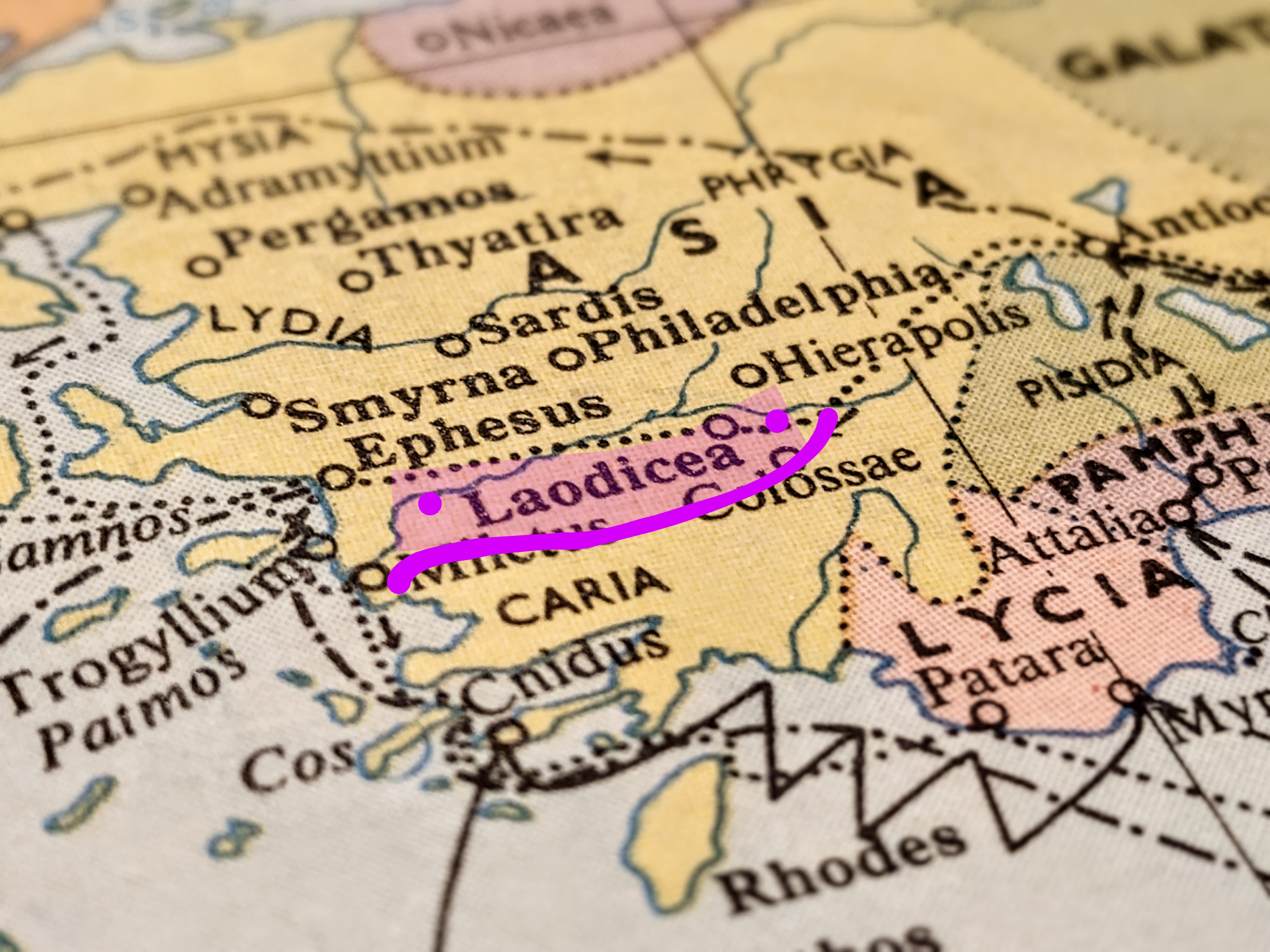
Between 90 to 100 AD, Jesus Christ inspired the apostle John to name in Revelation, the mostly future, historical eras of His true Church, known as the Church of God – after seven cities in northwestern Asia Minor. Those cities, now in modern day Turkey, were then part of the Roman Empire.

In Revelation chapters two and three Christ inspired John to prophesy about each of these congregations, assessing their spiritual strengths and weaknesses. They were Ephesus, Smyrna, Pergamos, Thyatira, Sardis, Philadelphia, and Laodicea. Linked together on a Roman mail route, the apostle John was, most likely, their overseeing pastor.

Jesus then prophetically addresses the future eras of God’s true Church – admonishing them to overcome their faults and remain actively faithful to His truth and to doing His work in their respective historical times.

The Ephesian era of the early apostles lasted until the death of the apostle John (the last of the original twelve). Each successive “church” of the seven then progresses down through the roughly 2,000 years of history since the time of Christ—right down to today!

Church eras six and seven

In our own historic memory, we have lived during the sixth era named after the 1st century city of Philadelphia, thus, the Philadelphian era. The church in ancient Philadelphia was one of the most productive when it came to preaching the gospel of the Kingdom of God to that part of the world as a witness in that day.

And, so too, the Church of God in the twentieth century, starting in the early 1930’s, rapidly grew in size, but it’s reach in proclaiming the true gospel of Jesus Christ and the Kingdom of God was even greater, through God’s blessing and the advent of the new technologies of radio and television.

Yet there is a seventh era when God’s work is concluded prior to Jesus’ second coming. Based on historical markers, we are living now in that ominous seventh historical era. The name of the city and the era is Laodicea!

Christ labelled this final era the “lukewarm church”…

“And to the angel of the church of the Laodiceans write, ‘These things says the Amen, the Faithful and True Witness, the Beginning of the creation of God: “I know your works, that you are neither cold nor hot. I could wish you were cold or hot. So then, because you are lukewarm, and neither cold nor hot, I will vomit you out of My mouth. Because you say, ‘I am rich, have become wealthy, and have need of nothing’—and do not know that you are wretched, miserable, poor, blind, and naked…” (Revelation 3:14-17).

Laodicea was prophesied to be (as a congregation—and an era) self-satisfied, self-righteous, proud, wealthy, and arrogant. If you watch world trends and attitudes, you will see and hear that self-centered reasoning echoing through modern secular society. Not surprisingly, and sadly, it also echoes through much of the organized elements of the true Church of God.

Beware! A culture – especially an arrogant culture tends to rub off on young and old, male and female. It’s very tempting to give in to things that are “woke” or currently approved by the society we live in, but God determines what is acceptable, not us or the world around us.

There is only one true antidote to self-righteous, Laodicean arrogance and that is submissive humility before God. “Remember your Creator…” Ecclesiastes 12:6. We aren’t self-sufficient, our lives continue, day by day, through God’s mercy.

The seven congregations listed in Revelation 2 and 3 were prophetic of God’s true Church during each respective era. And each era would have some spiritual strengths to build on… and each would have spiritual weaknesses to overcome.

The last – Laodicea can be spiritually deadly. But remember, you don’t have to be Laodicean!

*If you wish to reprint this commentary or learn more about how to do so, please contact me in the comments below. I reserve my rights to this content, it is not in the public domain for use or reprint without my permission.

**All images are property of Amanda Stiver, unless otherwise noted. Please do not re-use without permission.

BE A GOOD LOOKER-BACKER

How good are you presently at looking backward so you can better see forward?

We’re talking history here – so be advised if you tend to underrate the study of the historic past in school or in life generally. Undervaluing the study of history – ancient or modern – is a plague in most human cultures and often in higher educational systems.

Notice how our great God stresses the understanding of history in the heavens and on earth through the writing of King David:

I remember the days of oldI meditate on all Your works; I muse on the work of Your hands. I spread out my hands to You; My soul longs for You like a thirsty land. Selah

Psalm 143:5-6

Note that God and His faithful servants—the prophets and later His true Church all existed in history. That history is, by the way, still being made by God’s true Church today. That includes you and me and all our scattered brethren!

However, some in or attached to the Body of Christ (another term for “God’s true Church”) have too long been gambling with inattentive blindness – or are functionally inattentive to the work that our Savior Jesus Christ has been and is doing through his specially chosen faithful few.

What’s the spiritual fix?

How can each of us correct whatever amount of inattentive, spiritual blindness exists in our lives so near the end of this age – putting us so close to the second coming of our Lord and Savior, Jesus Christ?

The good news is that positive, corrective action is already at our fingertips:

Thus says the Lord: “Stand in the ways and see, And ask for the old paths, where the good way isAnd walk in it; Then you will find rest for your souls. But they said, ‘We will not walk in it.

Jeremiah 6:16

PS:  That last sentence of verse 16 is a sad story for those who choose the wrong path. Please carefully disregard the tragically unwise example of the stubborn and foolish.

Ask our great God in your prayers today for eyes to see the old paths that mark the good way. God has the ointment to cure our personal spiritual blindness, but we must ask for it!

*If you wish to reprint this commentary or learn more about how to do so, please contact me in the comments below. I reserve my rights to this content, it is not in the public domain for use or reprint without my permission.

**All images are property of Amanda Stiver, unless otherwise noted. Please do not re-use without permission.

MAKE A BOAT – AND COME ON OUT!

Missouri River, December 2021

We hosted a brunch at our house on a late Sunday morning many years ago near Elkhart, Indiana where I served as associate pastor in the late summer of 1983. The three guests of honor were three long-retired farmers from the local congregation.

These three men had begun farming before modern tractors were widely manufactured. Clyde grew up working with and training draft horses, and at the time he was 95 years of age. Bill had farmed with mules in northwestern Indiana and he was in his mid-80s. But Hoover grew up farming with oxen down South and was in his late 70s.  

By personal contrast I’d grown up tractor farm-ranch operations in northwestern Nebraska and southwestern South Dakota. However, compared to their draft animal experience and wisdom, I was humbled and marveled at how little I knew. Their stories added considerably to my appreciation for old-time farming. I’ve recounted one of them before.

High-water

But our story today is about an adventure in which Hoover had to paddle his way safely out of danger during a high-water flood on the lower Mississippi River. His family’s farm was down in the northern part of the state of Mississippi on the shore of that mighty river.

During nearly every one of his growing up years Hoover’s family and their neighbors faced some level of river flooding on their farms. The year of this story was one of the big, high-water floods at a time when the science of major flood control was still in the developmental stage.  

Then it started raining

Living along the southern section of America’s “Father of Waters” was not just about the rain coming down where you lived—but about what was flowing down from upstream. The flood was monitored in its early stages much further north along the upper Mississippi, the Missouri, and the Ohio Rivers.

As the rains came down, and the mighty Mississippi’s waters rose to flood their bottom lands, Hoover’s father moved their draft oxen and other livestock up the slopes nearer their house and barn. Over the next couple of days, the water moved up hill, too. Soon the floodwaters were creeping into the kitchen and living room.

It was clear that the flood had not crested. Hoover’s father gathered the family and laid out the plan. He and most of the family would haul as many belongings as could fit in the wagon. In the process they would also drive all the livestock ahead of them to safe, high ground. The camp they set up would be for the duration of the flood.

“Make a boat”

However, there was some concern about river looters who illegally used the pandemonium of big floods to steal whatever they could find in the temporarily vacated dwellings. Therefore, he instructed Hoover and his next younger brother that they would stay at the house to keep an eye on things. If the water got higher they were to move upstairs. But if the water kept rising, the boys were told to “make a boat and come on out to high ground”.

This was a load of responsibility for a 13-year-old! Hoover related that he and his brother felt some trepidation and were a little weepy-eyed watching their family disappear over the crest of the hill, livestock in tow.

Hoover explained to us that this was also when he began to comprehend the seriousness of sincere, believing prayer!

Boat building

Right away the two boys gathered all the boards they thought they’d need to build a makeshift, flood-worthy, flat-bottom boat that would carry themselves, their little dog, some food, rope, tools and a few other odds and ends.

You don’t have to look for motivation when it’s time to escape a big flood! The boat was finished and floating the next morning with the boys on the housetop loading food supplies and extra siding for repairs. Before launching their craft, they released the chickens, ducks and geese to fend for themselves.

With a prayer and some trepidation, Hoover and his younger brother shoved off their raft-boat into the rising waters using paddles made from shorter pieces of barn planks.

Finally, the brothers were making slow but steady headway toward safety. Hoover said it reminded him of the Adventures of Huckleberry Finn which he had read in school. It was almost a grand adventure as they used their push pole and paddles to make slow but steady progress toward high ground. But it wouldn’t be an uninterrupted trip!

Neighborly rescue

What with fighting the current and rising waters, the boys figured they’d made close to a mile toward safety when they heard the frantic call for help!  It was their rather stout, elderly neighbor lady standing on her rooftop. For our purposes we’ll call her Grandma Smith.

Her call for help was a call to duty so the boys made for her house. They paddled up alongside the rooftop and helped her get aboard with her little dog. To balance the load both boys moved to the front and paddled from there. Happily, however, their neighbor had brought a basket of food aboard which helped the boys’ energy levels.

Yet another load

Laboring hard at the oars for another half mile or so, Hoover saw something swimming toward their boat. It looked smaller than a large turtle, maybe a beaver? But it was making straight for their boat. Finally, they could see that it was yet another neighbor’s dog, but this one was a Great Dane!

Grandma Smith began calling to the huge dog encouraging it forward, and Hoover began shouting orders to “Kill that dog! Kill that dog, or he gonna swamp us!” A tough call for a young fellow, but one more animal aboard their raft would swamp it and drown them all.

Hoover lost the argument, however, and a compromise was achieved. Grandma Smith, seated aft on the boat, got the dog’s head and front paws on the rear edge of the raft and held on to its collar as it paddled along behind. And onward the boys toiled at the oars.

Hailed by the Law

By late afternoon Hoover, his brother, their dog, their neighbor Grandma Smith with her little dog and a very large rescue dog were still making slow but sure headway to safety where the Woods’ family and livestock were camped.  

The current carried our young rescuers around the curve of the slope leading to the high, dry ground for which they hoped. Then they heard the throaty rumble of a boat motor. As Hoover expected, it was the sheriff’s large motor launch.

The sheriff recognized the Woods boys and immediately call out, “Hoover, do you all need to be rescued?”

Hoover called back across the water, “No sir, Sheriff. We be fine here. We’re headed to high ground where the family has taken our livestock. You all go on ahead and rescue the folks what need’s rescuin’.”

Reassured, the sheriff motored on to do exactly that. Hoover and his brother, their neighbor lady, and all three dogs paddled on to a safe and happy rendezvous with their family long about dark.

The lesson

Hoover summed up the lesson from his farm adventure. When trouble comes your way: “Pray for God’s help. Gather your necessities. Help others in need. And then put your shoulder to the oars and make for high ground!” Don’t be afraid when trials come your way. Do what you know is right to do, and trust that God will provide what you lack.

*If you wish to reprint this commentary or learn more about how to do so, please contact me in the comments below. I reserve my rights to this content, it is not in the public domain for use or reprint without my permission.

**All images are property of Amanda Stiver, unless otherwise noted. Please do not re-use without permission.