Savor the Psalms…

Does poetry really have a relevant purpose in our daily prayers? What can we learn from the greatest poet of ancient Israel?

Much of the Bible – especially in the Old Testament was written in a poetic style. God inspired it that way. Our Creator likes good poetry – especially poetry that causes us to stop and think—the essence of digesting and applying God’s ways in our lives!

Divine poetry speaks powerfully to all ages and eras – including our own 21st century time frame. Imagine placing yourself as a “right there” listener to the lyrical and musical skills of King David!

An excellent writer, a marvelous poet, and the premier musician of his time—not only did King David compose music, he also invented musical instruments (see Nehemiah 12:36)! One instrument is mentioned here in Psalm 144:9:

“I will sing a new song to you, O God; On a harp of ten strings I will sing praises to You,…”

Furthermore, he was an inspired and faithful prophet of God—as well as being the great King of Israel. King David gave pen to many of the psalms, and likely some of the proverbs recorded in the Bible.  

King David beautifully expressed the spiritual and emotional depth of how one perceives and responds to God and His way. When we read these poems they help us to shape our thoughts and emotions in a godly way.

Faithful expression

Note how Psalm 143, penned by King David, expresses his faithfulness, dedication and closeness to God as his Creator (and likewise ours). A classic example of how David responded to God in heartfelt, poetic prayer (this is merely an excerpt): 

“I remember the days of old; I meditate on all your works; I muse on the work of Your hands. I spread out my hands to You; My soul longs for you like a thirsty land. Selah” (v. 5-6).

How essential is it for us to meditate on God’s works? To long for God and His perfect righteous way? In a world that is suffering a drought of godly thinking and obedience to the Ten Commandments, do we thirst for and prioritize obeying God in our lives?

Abundant imagery

Each psalm is a poetic (and oftentimes prophetic) message or prayer, often a plea to God. We also note that David wasn’t the only psalmist in Israel. However, from a human perspective he set the standard in his day and historically.

For example in Psalm 144 King David pleads with God for protection and asks for God’s blessings, described with beautiful imagery of agricultural abundance:

“Rescue me and deliver me from the hand of foreigners,
Whose mouth speaks lying words,
And whose right hand is a right hand of falsehood—
That our sons may be as plants grown up in their youth;
That our daughters may be as pillars, Sculptured in palace style;
That our barns may be full, Supplying all kinds of produce;
That our sheep may bring forth thousands And ten thousands in our fields;
That our oxen may be well laden; That there be no breaking in or going out; That there be no outcry in our streets.
Happy are the people who are in such a state; Happy are the people whose God is the Lord!”
(Psalm 144:11-15)

In verse 14 is a plea that God will not send Israel into captivity, “…no breaking in or going out; …no outcry in our streets.”

As we know, after they split, both the northern Kingdom of Israel and the southern Kingdom of Judah were eventually taken captive by Assyria and Babylon, respectively. Therefore, this psalm also serves as a prophecy.

All of these complex themes are sewn together through very beautiful poetic verse.

Putting poetry to work

When you are at a loss for a Bible study subject or struggling to put your prayers into words, take one of the psalms and read it as though you are praying it personally. See where you can incorporate the words and phrases that do honor to God, magnify His greatness, and give voice to our hard-to-define thoughts and emotions.

Learn to savor the Psalms and they will enrich your prayers and communication with God!

-Randy Stiver

*If you wish to reprint this commentary or learn more about how to do so, please contact me in the comments below. I reserve my rights to this content, it is not in the public domain for use or reprint without my permission.

**All images are property of Amanda Stiver, unless otherwise noted. Please do not re-use without permission.
MAKE A BOAT – AND COME ON OUT!

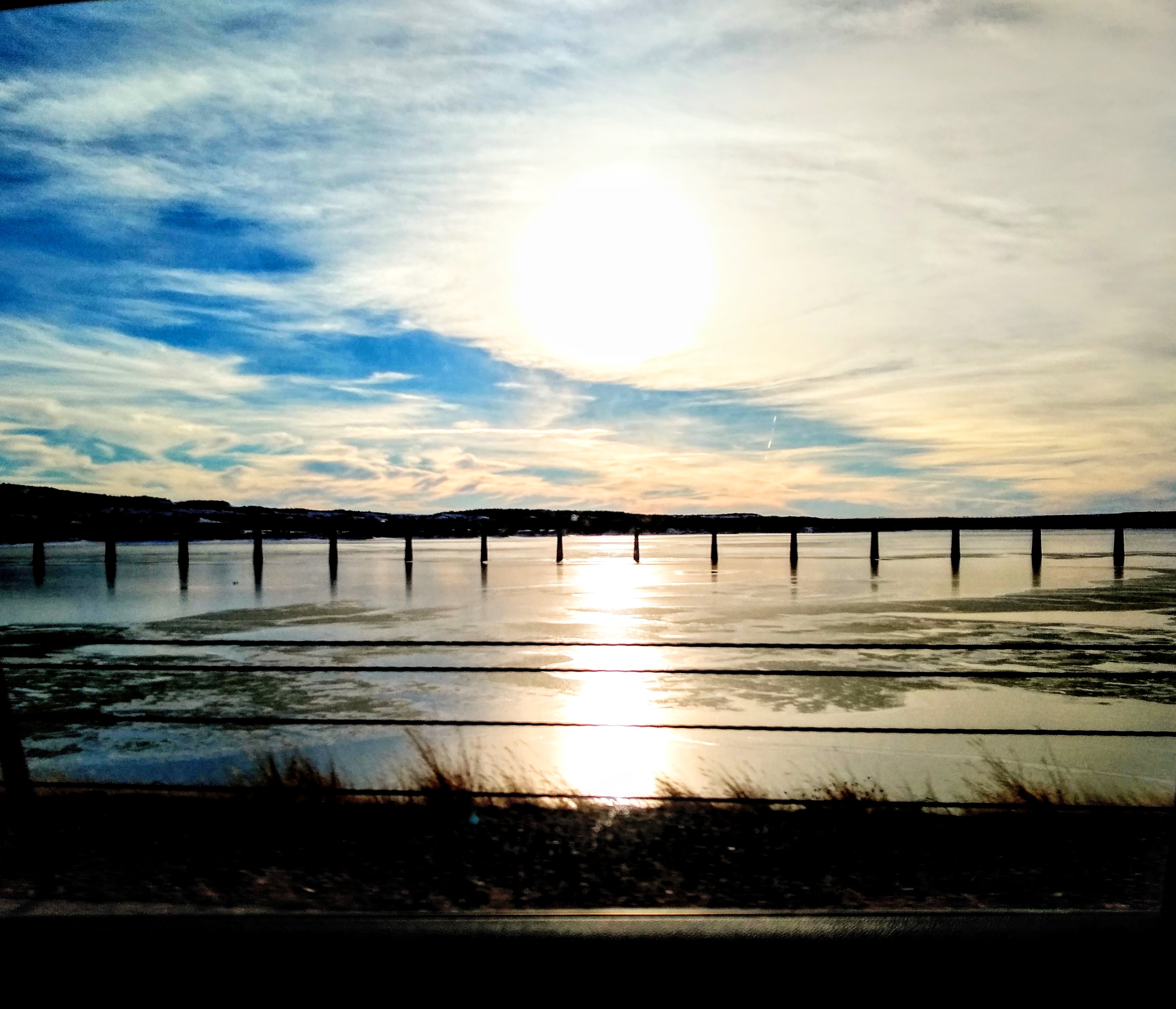
Missouri River, December 2021

We hosted a brunch at our house on a late Sunday morning many years ago near Elkhart, Indiana where I served as associate pastor in the late summer of 1983. The three guests of honor were three long-retired farmers from the local congregation.

These three men had begun farming before modern tractors were widely manufactured. Clyde grew up working with and training draft horses, and at the time he was 95 years of age. Bill had farmed with mules in northwestern Indiana and he was in his mid-80s. But Hoover grew up farming with oxen down South and was in his late 70s.  

By personal contrast I’d grown up tractor farm-ranch operations in northwestern Nebraska and southwestern South Dakota. However, compared to their draft animal experience and wisdom, I was humbled and marveled at how little I knew. Their stories added considerably to my appreciation for old-time farming. I’ve recounted one of them before.

High-water

But our story today is about an adventure in which Hoover had to paddle his way safely out of danger during a high-water flood on the lower Mississippi River. His family’s farm was down in the northern part of the state of Mississippi on the shore of that mighty river.

During nearly every one of his growing up years Hoover’s family and their neighbors faced some level of river flooding on their farms. The year of this story was one of the big, high-water floods at a time when the science of major flood control was still in the developmental stage.  

Then it started raining

Living along the southern section of America’s “Father of Waters” was not just about the rain coming down where you lived—but about what was flowing down from upstream. The flood was monitored in its early stages much further north along the upper Mississippi, the Missouri, and the Ohio Rivers.

As the rains came down, and the mighty Mississippi’s waters rose to flood their bottom lands, Hoover’s father moved their draft oxen and other livestock up the slopes nearer their house and barn. Over the next couple of days, the water moved up hill, too. Soon the floodwaters were creeping into the kitchen and living room.

It was clear that the flood had not crested. Hoover’s father gathered the family and laid out the plan. He and most of the family would haul as many belongings as could fit in the wagon. In the process they would also drive all the livestock ahead of them to safe, high ground. The camp they set up would be for the duration of the flood.

“Make a boat”

However, there was some concern about river looters who illegally used the pandemonium of big floods to steal whatever they could find in the temporarily vacated dwellings. Therefore, he instructed Hoover and his next younger brother that they would stay at the house to keep an eye on things. If the water got higher they were to move upstairs. But if the water kept rising, the boys were told to “make a boat and come on out to high ground”.

This was a load of responsibility for a 13-year-old! Hoover related that he and his brother felt some trepidation and were a little weepy-eyed watching their family disappear over the crest of the hill, livestock in tow.

Hoover explained to us that this was also when he began to comprehend the seriousness of sincere, believing prayer!

Boat building

Right away the two boys gathered all the boards they thought they’d need to build a makeshift, flood-worthy, flat-bottom boat that would carry themselves, their little dog, some food, rope, tools and a few other odds and ends.

You don’t have to look for motivation when it’s time to escape a big flood! The boat was finished and floating the next morning with the boys on the housetop loading food supplies and extra siding for repairs. Before launching their craft, they released the chickens, ducks and geese to fend for themselves.

With a prayer and some trepidation, Hoover and his younger brother shoved off their raft-boat into the rising waters using paddles made from shorter pieces of barn planks.

Finally, the brothers were making slow but steady headway toward safety. Hoover said it reminded him of the Adventures of Huckleberry Finn which he had read in school. It was almost a grand adventure as they used their push pole and paddles to make slow but steady progress toward high ground. But it wouldn’t be an uninterrupted trip!

Neighborly rescue

What with fighting the current and rising waters, the boys figured they’d made close to a mile toward safety when they heard the frantic call for help!  It was their rather stout, elderly neighbor lady standing on her rooftop. For our purposes we’ll call her Grandma Smith.

Her call for help was a call to duty so the boys made for her house. They paddled up alongside the rooftop and helped her get aboard with her little dog. To balance the load both boys moved to the front and paddled from there. Happily, however, their neighbor had brought a basket of food aboard which helped the boys’ energy levels.

Yet another load

Laboring hard at the oars for another half mile or so, Hoover saw something swimming toward their boat. It looked smaller than a large turtle, maybe a beaver? But it was making straight for their boat. Finally, they could see that it was yet another neighbor’s dog, but this one was a Great Dane!

Grandma Smith began calling to the huge dog encouraging it forward, and Hoover began shouting orders to “Kill that dog! Kill that dog, or he gonna swamp us!” A tough call for a young fellow, but one more animal aboard their raft would swamp it and drown them all.

Hoover lost the argument, however, and a compromise was achieved. Grandma Smith, seated aft on the boat, got the dog’s head and front paws on the rear edge of the raft and held on to its collar as it paddled along behind. And onward the boys toiled at the oars.

Hailed by the Law

By late afternoon Hoover, his brother, their dog, their neighbor Grandma Smith with her little dog and a very large rescue dog were still making slow but sure headway to safety where the Woods’ family and livestock were camped.  

The current carried our young rescuers around the curve of the slope leading to the high, dry ground for which they hoped. Then they heard the throaty rumble of a boat motor. As Hoover expected, it was the sheriff’s large motor launch.

The sheriff recognized the Woods boys and immediately call out, “Hoover, do you all need to be rescued?”

Hoover called back across the water, “No sir, Sheriff. We be fine here. We’re headed to high ground where the family has taken our livestock. You all go on ahead and rescue the folks what need’s rescuin’.”

Reassured, the sheriff motored on to do exactly that. Hoover and his brother, their neighbor lady, and all three dogs paddled on to a safe and happy rendezvous with their family long about dark.

The lesson

Hoover summed up the lesson from his farm adventure. When trouble comes your way: “Pray for God’s help. Gather your necessities. Help others in need. And then put your shoulder to the oars and make for high ground!” Don’t be afraid when trials come your way. Do what you know is right to do, and trust that God will provide what you lack.

*If you wish to reprint this commentary or learn more about how to do so, please contact me in the comments below. I reserve my rights to this content, it is not in the public domain for use or reprint without my permission.

**All images are property of Amanda Stiver, unless otherwise noted. Please do not re-use without permission.